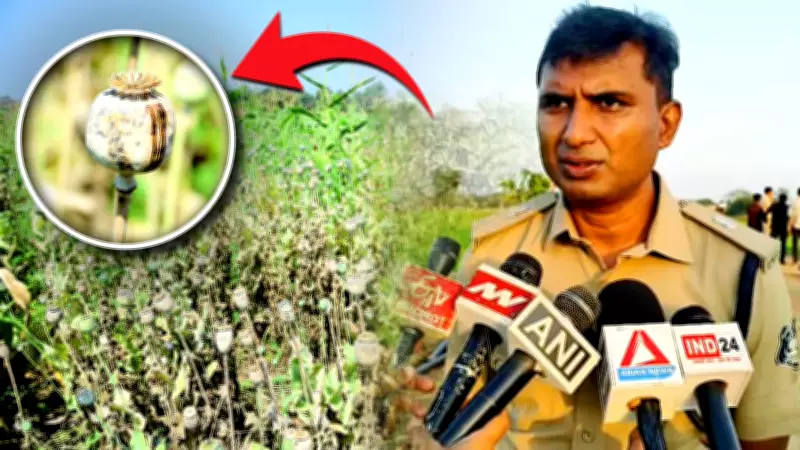
Major Opium Cultivation Uncovered in Chhattisgarh, BJP Leader Arrested
A significant illegal opium cultivation operation has been exposed in Chhattisgarh's Durg district, leading to the arrest of a local BJP leader and two others. The discovery has sparked a major political controversy in the state.
Police Raid Reveals Concealed Opium Crop
Acting on specific intelligence, a joint team comprising police officers, Narcotics Control Bureau officials, and revenue department personnel conducted a raid on farmland in Samoda village. The property is linked to Vinayak Tamrakar, a leader of the BJP Kisan Morcha.
During the operation, authorities found a substantial opium crop cleverly concealed among other agricultural plants, primarily maize. Preliminary estimates suggest the seized opium has a street value of approximately ₹8 crore.

Arrests and Legal Action
Following the raid, Vinayak Tamrakar and two other individuals were taken into custody. Police have registered a formal case under the stringent Narcotic Drugs and Psychotropic Substances (NDPS) Act, which carries severe penalties for cultivation, possession, and trafficking of illegal substances.
The arrests highlight the ongoing challenges law enforcement faces in combating drug-related activities in rural areas, where such operations can sometimes be hidden within legitimate farming practices.
Political Fallout and Party Response
In response to the serious allegations, the Bharatiya Janata Party has swiftly suspended Vinayak Tamrakar from the party. This move underscores the party's stated zero-tolerance policy toward illegal activities among its members.
The incident has drawn sharp criticism from opposition leaders. Former Chief Minister Bhupesh Baghel visited the raid site and raised pointed questions about how such a large-scale illegal cultivation operation could have gone undetected by authorities.
Baghel demanded immediate answers from the current state government regarding oversight and monitoring mechanisms, suggesting potential lapses in agricultural and law enforcement surveillance systems.
Broader Implications and Investigation
This case brings attention to several critical issues:
- Agricultural Monitoring: The concealment of opium within maize crops raises questions about crop verification processes.
- Political Accountability: The involvement of a political party member highlights concerns about screening and monitoring of representatives.
- Law Enforcement Coordination: The successful raid demonstrates effective inter-agency cooperation but also reveals vulnerabilities in routine surveillance.
Investigators are now working to determine the full scope of the operation, including potential distribution networks and financial beneficiaries. The case is expected to develop further as forensic analysis of the seized materials continues and additional suspects are identified.
The discovery serves as a stark reminder of the persistent challenges in eradicating illegal drug cultivation, even as authorities intensify efforts to combat narcotics trafficking across India.