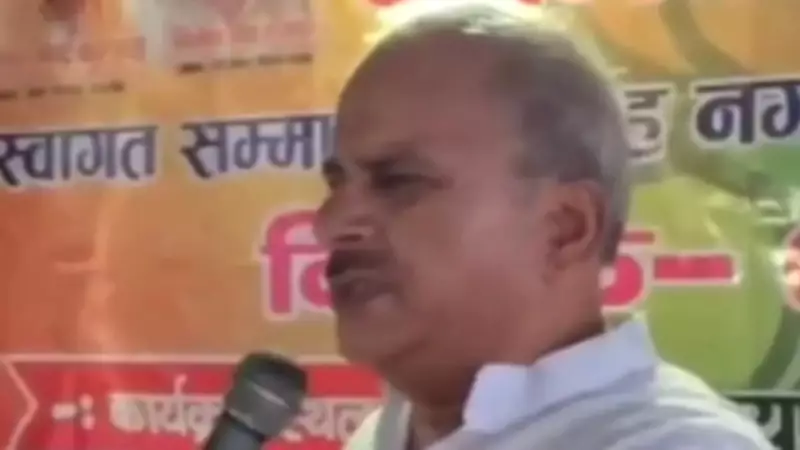
BJP MLA Anil Parshar from Aligarh's Koil assembly constituency has sparked controversy after appearing to justify police encounters, stating that two men accused of robbery were sent to Allah within five days of committing the crime. A video of his remarks has gone viral on social media, drawing widespread criticism.
Controversial Remarks in Mandrak Area
Speaking in Aligarh's Mandrak area, Parshar was heard saying: Two culprits were shot dead in a police encounter. Do you know this? They had targeted women. This is the government of Modi and Yogi. The MLA confirmed to the Times of India on Sunday that he had visited the area three days earlier and made the statement. He defended his comments, saying: If culprits loot mothers and sisters, then law and order agencies will definitely act. If they had done wrong, the cops would do whatever is necessary.
Background of the Encounter
On May 17, ten women cutting grass in a field in Aligarh were allegedly robbed at gunpoint by two men on a motorcycle. Police launched a search, and on May 24, the suspects Raza Mohammad from Hapur and Momin from Bulandshahr were killed in a late-night police encounter. They were taken to a hospital, where doctors declared them dead. Police stated that both had multiple criminal cases, primarily for robbery and chain-snatching.

Legal Concerns Over Encounter Culture
The incident has raised questions about due process, especially given the Supreme Court of India's observations on maintaining adequate safeguards in encounter cases. Earlier this year, while hearing a bail application of an accused who suffered serious gunshot injuries, the Allahabad High Court strongly criticized the encounter culture in the state, noting that police firing at the legs of the accused has become a routine feature.
The remarks by Parshar have added fuel to the debate over extrajudicial killings and the role of law enforcement in Uttar Pradesh. While some supporters argue that strong action deters crime, critics contend that encounters undermine the rule of law and violate fundamental rights.