

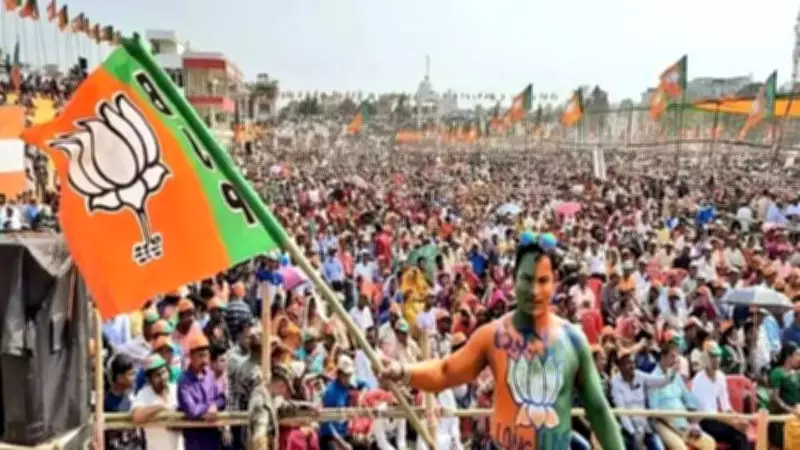
The Bharatiya Janata Party (BJP) has significantly intensified its electoral preparations for the upcoming Kerala Legislative Assembly elections by releasing its second list of candidates on Monday. This latest announcement comprises 39 nominees, marking a strategic escalation in the party's campaign efforts across the southern state.
High-Profile Contests and Key Nominations
Among the notable candidates, the BJP has fielded K Ranjith from the Dharmadam constituency, where he will directly challenge incumbent Chief Minister Pinarayi Vijayan, who has also filed his nomination from this key seat. This sets the stage for a high-stakes electoral battle in one of Kerala's most watched constituencies.
Former Mizoram Governor Kummanam Rajasekharan has received the party's nomination from Aranmula, bringing his administrative experience to the electoral fray. Other significant candidates announced in this second list include Ashwini ML from Kasaragod, PR Sivasankar from Ernakulam, Vathsala Prasanna Kumar from Paravur, and Renu Suresh from Kongad. These nominations reflect the BJP's concerted effort to expand its political footprint beyond traditional strongholds in Kerala.

Previous Announcements and Opposition Moves
The BJP had previously unveiled its first list of 47 candidates on March 19, which featured prominent names such as Kerala unit president Rajeev Chandrasekhar contesting from the Nemom seat and former Union Minister of State for External Affairs V Muraleedharan standing from Kazhakoottam. This two-phase candidate announcement strategy demonstrates the party's methodical approach to the Kerala elections.
Meanwhile, the principal opposition party, the Indian National Congress, has already released its list of 55 candidates. Kerala Pradesh Congress Committee president Sunny Joseph will contest from Peravoor, while Leader of Opposition V D Satheesan has been fielded from Paravur. Senior Congress leader K Muraleedharan, son of former Chief Minister K. Karunakaran, will contest from Vattiyoorkavu, adding to the political dynastic element in these elections.
Election Schedule and Political Landscape
According to the Election Commission of India, the 2026 Kerala Legislative Assembly elections will be conducted in a single phase on April 9, with vote counting scheduled for May 4. The term of the current 140-member assembly, also known as the Kerala Niyamasabha, is set to conclude on May 23. The Model Code of Conduct is now officially in force across the state, regulating campaign activities and government operations during this period.
The electoral contest is anticipated to be exceptionally intense, with both the BJP-led National Democratic Alliance (NDA) and the Congress-led United Democratic Front (UDF) aiming to unseat the incumbent Communist Party of India (Marxist)-led Left Democratic Front (LDF). The LDF has governed Kerala for nearly a decade, making this election a crucial test of its continued political dominance in the state.
Broader Electoral Context
The 2026 elections represent a pivotal year for democratic processes across multiple regions in India and globally. This includes significant state assembly elections, local body polls, and by-elections that could substantially influence national-level political dynamics. The Kerala assembly elections, in particular, are being closely monitored as they could signal shifting political alignments in a state traditionally dominated by bipolar politics between the LDF and UDF.
The BJP's expanded candidate lists indicate its determination to emerge as a credible third force in Kerala politics, challenging the established political duopoly. As campaign activities intensify, all major political formations are expected to deploy substantial resources and strategic efforts to secure victory in what promises to be one of the most closely contested Kerala assembly elections in recent history.






