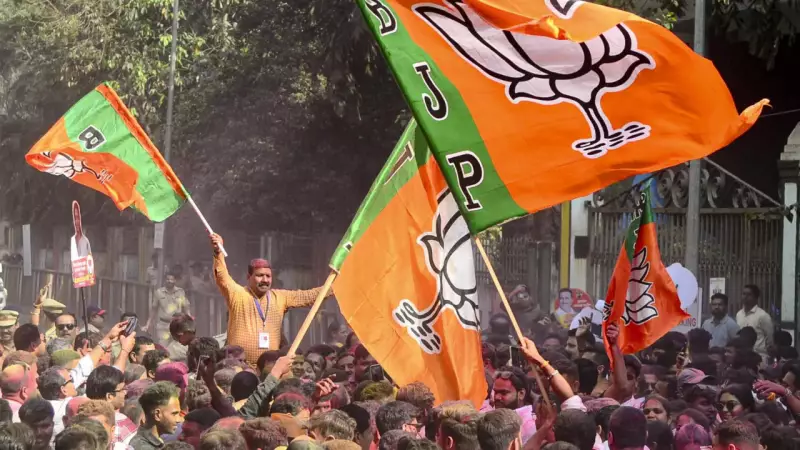
Mumbai witnesses a major political shift. The Bharatiya Janata Party, along with its allies, now commands the Brihanmumbai Municipal Corporation. This development ends the Thackeray family's long-standing dominance over India's wealthiest civic body.
A New Era for Mumbai's Civic Administration
For almost thirty years, the Thackerays held the reins of the BMC. That era has now concluded. The Mahayuti alliance, spearheaded by the BJP and including former ally Eknath Shinde, has successfully captured control. This marks a significant transformation in Mumbai's political landscape.
The Numbers Behind the Victory
On Friday, the Mahayuti alliance secured more than 114 seats in the 227-member house. The BJP itself won 89 seats. Shinde's Shiv Sena faction contributed 29 seats to the alliance's total. This gives the coalition a working majority, though BJP will require Shinde's support for major decisions.

The Thackeray-led Shiv Sena (UBT) managed to win 71 seats. They retained strength in several Marathi-dominated wards. However, their influence waned in other urban centers like Thane and Navi Mumbai.
Vote Share and Political Narratives
In terms of vote share, BJP led with 21.6%. Shiv Sena (UBT) followed with 13.2%. The Shinde-led Shiv Sena garnered 5%, while Congress secured 4.4%. On the surface, Uddhav Thackeray's faction winning more seats than Shinde's group might seem like a moral victory. Yet, the ultimate outcome is clear: the Thackerays have lost their BMC stronghold.
The Significance of the BMC for the Thackerays
The BMC was far more than just another municipal corporation for the Thackeray family. It served as their political fortress for decades. This institution provided crucial resources and patronage, fueling their organizational growth. Recognizing its importance, Uddhav Thackeray allied with his estranged cousin, MNS chief Raj Thackeray. Together, they campaigned vigorously to defend this citadel.
Campaign Strategies and Counter-Narratives
During the campaign, the Thackerays invoked historical sentiments. They referenced the 1961 Samyukta Maharashtra movement, in which their grandfather participated. They alleged that BJP planned to separate Mumbai from Maharashtra and merge it with Gujarat.
Chief Minister Devendra Fadnavis, who led the BJP's campaign, consistently denied these claims. He worked to ensure that the Thackerays' appeals to Marathi pride and identity did not resonate strongly with voters this time.
The Thackerays also raised issues like unemployment and neglect of local residents. Fadnavis countered with a vision of a "Global Mumbai." BJP fielded over ninety Marathi candidates for the BMC polls. The party also announced that the next mayor of Mumbai would be a Marathi person.
Broader Political Realignments in Maharashtra
This victory is part of a larger political strategy. Three years ago, BJP facilitated splits within the Shiv Sena and the Nationalist Congress Party. These moves created confusion among party cadres and traditional voters, as different factions claimed the legacy of their original parties.
A BJP leader explained the rationale behind these alliances. "Many supporters were upset when Ajit Pawar joined the Fadnavis government after the NCP split. They questioned why we needed him. We hope they now understand our larger plan," the leader stated.
Long-Term Planning and Organizational Work
BJP's efforts in western Maharashtra began well before the 2023 NCP split. Since 2014, the party has been strengthening its presence in cooperative sectors. This includes sugar mills, banks, and milk unions, which traditionally formed the backbone of NCP's support.
Over the years, several loyalists of Sharad Pawar and Congress leaders from the cooperative sector shifted to BJP. This gradual erosion weakened Pawar's base in the region known as the "sugar bowl."
Implications for Maharashtra's Political Future
Friday's election results send a clear message. In the "new Maharashtra," no political brand is immune to change. The Thackeray family's loss of the BMC underscores this reality. The BJP's strategic alliances and sustained grassroots work have reshaped the state's political dynamics.

The takeover of the BMC represents a pivotal moment. It not only alters the administration of Mumbai but also signals a broader shift in Maharashtra's political power structure. The coming months will reveal how this new leadership governs India's financial capital.