

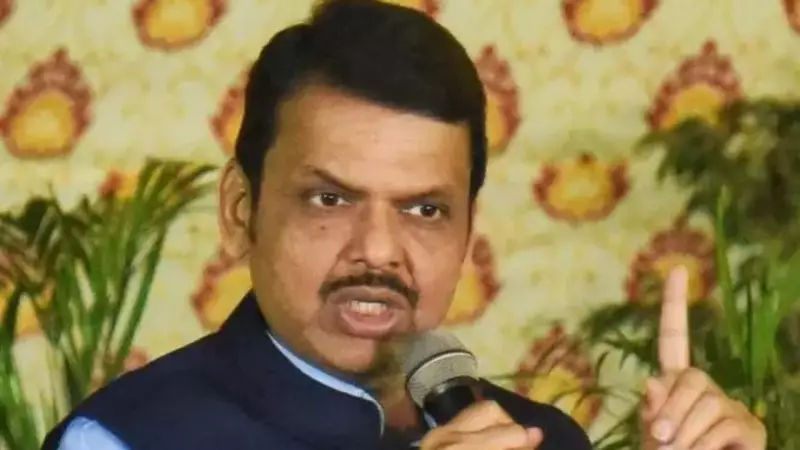
In a candid revelation, Maharashtra Chief Minister Devendra Fadnavis has disclosed that the Bharatiya Janata Party (BJP) deliberately softened its stance and settled for a reduced number of seats in key municipal corporations of the Mumbai Metropolitan Region. This strategic concession was made solely to safeguard its political partnership with Deputy Chief Minister Eknath Shinde.
Sentimental Reasons Behind the Seat Adjustment
Fadnavis explicitly stated that the decision was driven by sentimental reasons, acknowledging Thane as the political stronghold and identity of Deputy CM Eknath Shinde. He emphasized that the BJP, despite its historical dominance in the region, chose to take a step back. "Thane was always BJP’s bastion and we gained immense power in the region over the years," Fadnavis said, highlighting the party's entrenched position.
He elaborated that the party had the capacity to contest independently or negotiate for a larger share of seats. However, the leadership, including himself and state BJP president Ravindra Chavan, prioritized the health of the alliance. "We convinced our workers and took a back seat, considering Thane is Shinde’s dominion and identity," Fadnavis explained.

Preserving the Alliance at All Costs
The core of Fadnavis's argument centered on the imperative to maintain a harmonious relationship with Shinde, whose Shiv Sena faction is a crucial ally in the state's ruling coalition. He expressed a clear unwillingness to let electoral seat-sharing disrupt this vital partnership.
"Our state president, Ravindra Chavan, and I didn’t want our relations with Shinde to be affected for the sake of a few seats," Fadnavis stated. He framed the concession as a strategic necessity rather than a sign of weakness, arguing that aggressively claiming seats in Shinde's core area would have undermined the very foundation of their alliance.
A Strategic Choice Over Immediate Gain
Fadnavis framed the move as a calculated, long-term political decision. The BJP's objective was to demonstrate its reliability as an ally, even if it meant forgoing short-term electoral gains in specific localities like Thane and Kalyan-Dombivli.
"If we had disturbed him in his dominion, our stand as allies would be defeated," he concluded, underscoring that the broader stability of the Maharashtra government and the coalition was more important than maximizing corporation seats. This admission provides a rare glimpse into the complex negotiations and relationship management that underpin India's political alliances, where sentiment and long-term strategy often override immediate arithmetic.






