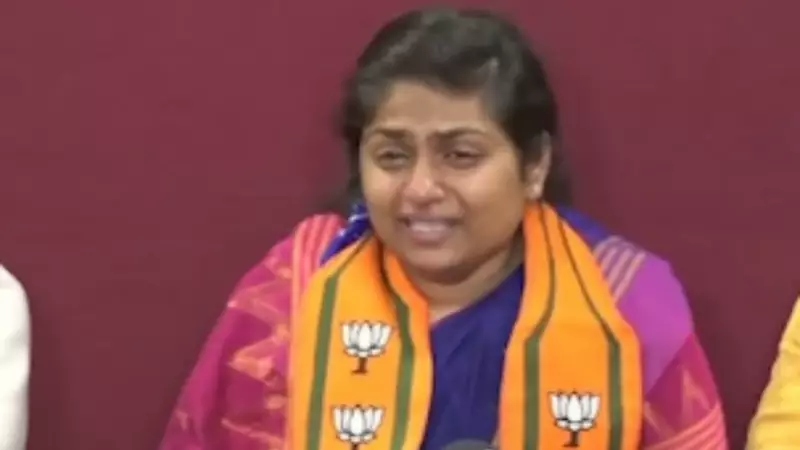
In a significant last-minute development, the Bharatiya Janata Party (BJP) has revoked the candidature of Pooja More-Jadhav for the upcoming Pune Municipal Corporation elections. The decision came swiftly after strong opposition from within the party's own ranks, triggered by the emergence of controversial old videos on social media platforms.
Social Media Storm Leads to Withdrawal
The controversy erupted when several videos from the past began circulating online. In these clips, a woman alleged to be More-Jadhav was seen making personal comments targeting Maharashtra Chief Minister Devendra Fadnavis and his wife. The remarks were reportedly made during the peak of the Maratha reservation agitation. The videos quickly gained traction, leading to an uproar among local BJP workers who opposed her candidature under the party banner.
More-Jadhav had officially received the party's AB form to contest from Ward No. 2 in Pune. Her nomination was facilitated under the quota reserved for the BJP's alliance partner, the Republican Party of India (RPI). However, the alliance ticket could not shield her from the internal party rebellion that followed the video leak.

Official Confirmation and Candidate's Defense
The withdrawal was confirmed by Union Minister and Pune BJP MP, Murlidhar Mohol. This official confirmation put an end to the speculation surrounding her candidacy. Reacting to the dramatic turn of events, Pooja More-Jadhav presented a different side to the story.
She stated that she had become a victim of intense and malicious social media trolling. "Misinformation was spread about me to portray that I do not believe in the BJP’s ideology," she claimed. More-Jadhav insisted that the decision to step back was her own, taken consciously in light of the online harassment. Furthermore, she made a crucial denial regarding the viral videos, asserting that the remarks were made by "some other girl" and had been falsely attributed to her on digital platforms.
Implications for Pune Civic Polls
This incident highlights the growing influence of social media vetting in Indian politics, where past actions and statements can resurface to derail political aspirations. It also underscores the challenges political parties face in managing discontent among grassroots workers, whose support is crucial during local body elections.
The BJP now faces the task of finding a replacement candidate for Ward No. 2, a move that will need to placate both its own workers and its alliance partner, the RPI. The episode serves as a stark reminder of how quickly a candidacy can unravel in the digital age, where old videos can trigger new political crises.