The Bharatiya Janata Party (BJP) has taken a significant organisational step in West Bengal, announcing its long-awaited state committee just three months before the scheduled assembly elections. This move is seen as a strategic reset aimed at streamlining the party's campaign machinery and presenting a united front against the ruling Trinamool Congress.
A Committee Built for Discipline and Focus
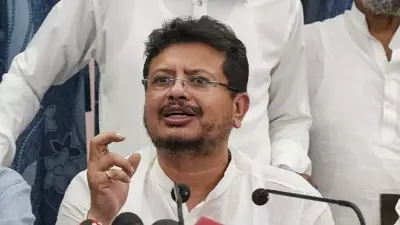
The 35-member committee, finalised under the leadership of state president Samik Bhattacharya, reflects a clear political choice. The party has prioritised organisational discipline over individual prominence. The core principle behind the restructuring is to create a distinct separation between leaders who will contest the elections and those who will manage the party's day-to-day operations.
This decision comes after considerable delay, with internal friction between the party's old guard and newer members inducted after the 2019 Lok Sabha polls pushing the announcement past the Durga Puja season. The final list bears the imprint of central observer Sunil Bansal's directive that leaders preparing for electoral battles should not simultaneously run the organisation.

Notable Inclusions and Exclusions
In a major development, former state president Dilip Ghosh has been kept out of the new state committee. This exclusion is significant despite recent public encouragement from the central leadership, including Union Home Minister Amit Shah, for veterans to remain active. Ghosh's omission points to a conscious effort to prevent parallel centres of authority within the state unit.
Of the five leaders who served as general secretaries in the previous committee, only Jyotirmoy Singh Mahato and Locket Chatterjee have retained their posts. They will anchor organisational work in western and southern Bengal, regions where the BJP is keen to stop any erosion of support.
The other three—Agnimitra Paul, Jagannath Chatterjee, and MLA Deepak Barman—have been elevated to the position of vice-president. This is widely interpreted within the party as an honour that comes without direct operational control, and all three are expected to be fielded as candidates.
Balancing the Old and the New
The reshuffle carefully balances experience with fresh energy. Key beneficiaries include Bishnupur MP Saumitra Khan, who has been promoted to general secretary. He is joined by north Bengal organiser Bapi Goswami and Kolkata-based Shashi Agnihotri, both chosen for their expertise in booth-level management and cadre mobilisation rather than as probable candidates.
This balance is deliberate: Goswami represents the RSS-rooted old cadre, while Khan, a post-2019 inductee, is being rewarded for holding the Bishnupur seat even as the party's base in southern Bengal weakened after the 2021 assembly defeat.
State president Samik Bhattacharya has also reopened doors for some sidelined veterans. The return of Tanuja Chakraborty as a vice-president, once the face of the party's women's wing, signals a selective rehabilitation of sections of the old cadre base.
Frontal Organisations and TMC Turncoats
The BJP has also named new heads for its crucial frontal organisations, which act as a key mobilisation layer. The appointments include Indranil Khan (youth wing), Falguni Patra (Mahila Morcha), Rajiv Bhowmik (Kisan Morcha), Shubhendu Sarkar (OBC Morcha), Sujit Biswas (SC Morcha), and MP Khagen Murmu (ST Morcha).
Equally notable is the accommodation of former TMC leader Tapas Ray as a vice-president. This reinforces the BJP's continued reliance on leaders with TMC backgrounds to expand its footprint in urban and semi-urban areas—a strategy that has yielded mixed results in past elections against Mamata Banerjee's formidable party.
The Road to the High-Stakes Election
The final committee comprises 12 vice-presidents, 5 general secretaries, and 12 secretaries, with women accounting for roughly one-fifth of the total strength (7 members). With the Election Commission expected to announce the poll schedule after the SIR process concludes in February, the BJP's latest organisational bet is clear.

It aims to dampen internal disquiet, sharpen the focus on booth-level management, and present a united, carefully curated front for what is anticipated to be its toughest state contest since the 2021 defeat. The Trinamool Congress, led by Chief Minister Mamata Banerjee, has been in power for three consecutive terms since 2011, and the BJP has never won an assembly election in Bengal. The battle for the 294-seat assembly, due in April-May, is set to be a defining political clash.