Bhabanipur Emerges as Epicenter of West Bengal's Political Warfare
The Bhabanipur assembly constituency has rapidly transformed into the primary battleground for the upcoming 2026 West Bengal legislative elections. Political analysts and strategists are closely monitoring this high-stakes contest, as it represents a critical component of the Bharatiya Janata Party's overarching electoral strategy in the state.
BJP's Calculated Gambit: Containing the Chief Minister's Influence
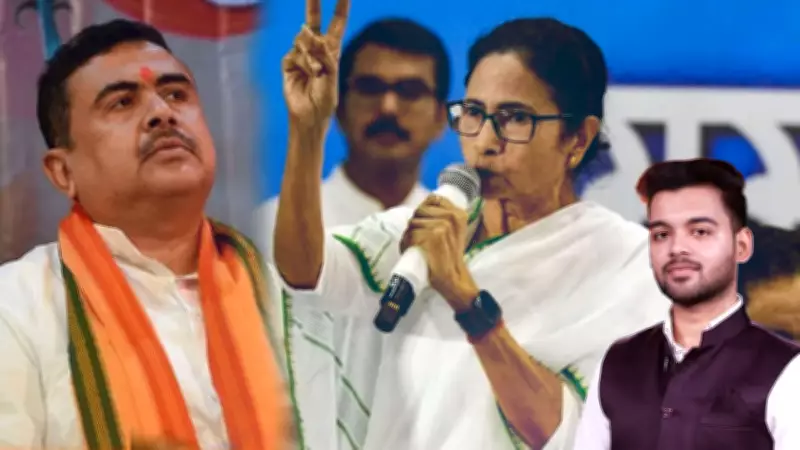
By nominating Suvendu Adhikari, a former Trinamool Congress heavyweight who defected to the BJP, the party has deliberately elevated the significance of the Bhabanipur contest. This strategic maneuver is widely interpreted as an attempt to confine Chief Minister Mamata Banerjee's political mobility and restrict her ability to campaign extensively across West Bengal. The BJP aims to force Banerjee into a protracted and resource-intensive battle in her own backyard, thereby limiting her outreach to other crucial constituencies.
Political observers note that this approach seeks to neutralize one of Banerjee's greatest strengths: her charismatic, grassroots campaigning style that has historically galvanized support throughout the state. By creating a high-profile showdown in Bhabanipur, the BJP hopes to divert the Chief Minister's attention and resources, potentially weakening the Trinamool Congress's position in other regions.

Demographic Dynamics and Electoral Mechanics
Beyond the headline-grabbing candidate face-off, several underlying factors contribute to Bhabanipur's outsized importance. Recent demographic changes within the constituency, coupled with comprehensive revisions to the electoral rolls, have introduced new variables that could sway the outcome. These elements are not merely local concerns; they possess the potential to create ripple effects across West Bengal's political landscape.
The Election Commission's bureaucratic overhaul has further intensified the political skirmish between the TMC and BJP, with both parties scrutinizing every administrative decision for potential advantages. This technical aspect of election management has become another front in the ongoing conflict, highlighting how every detail matters in what promises to be a closely fought election.
Broader Implications for West Bengal's Political Future
The Bhabanipur contest transcends a simple assembly seat battle; it is increasingly viewed as a microcosm of the larger struggle for political dominance in West Bengal. A decisive outcome here could significantly influence voter perceptions and momentum heading into the full state elections. The BJP's strategy appears designed not just to win a seat, but to fundamentally alter the campaign dynamics across West Bengal.
This high-stakes confrontation follows the dramatic political trajectory from Nandigram to Bhabanipur, where Suvendu Adhikari has once again positioned himself as Banerjee's principal adversary. The personal and political histories between these two figures add layers of narrative complexity to what is already a strategically vital contest.
As the 2026 elections approach, all eyes remain fixed on Bhabanipur, where every development is analyzed for its potential to reshape West Bengal's political equations. The BJP's containment strategy against Mamata Banerjee will be tested here, with results that could echo far beyond the constituency's boundaries.