Mumbai's Civic Verdict: BMC Election Results 2026 Counting Begins
Mumbai holds its breath as counting for the Brihanmumbai Municipal Corporation elections starts today. After a nine-year gap filled with pandemic delays and legal battles, the city finally voted on Thursday. Voter turnout settled between 53% and 55%, slightly below the 2017 record but still respectable for civic polls.
Counting Process and Expected Delays
The State Election Commission adopted a phased counting approach this time. Unlike 2017 when all 227 wards were counted simultaneously, only 46 wards will be processed initially across 23 centers. This staggered method means trends will emerge slowly, with final results possibly delayed until late evening or beyond.
Counting begins at 10 am on Friday. Officials confirm the process will be gradual, with just two wards counted at each center during the first phase. This careful approach contrasts sharply with previous elections and adds to the suspense surrounding Mumbai's next mayor.

Voter Turnout and Challenges
Mumbai recorded moderate participation despite numerous hurdles. Many voters complained about missing names from electoral rolls and last-minute polling booth changes. Elderly citizens faced particular confusion due to altered ward boundaries and inadequate communication.
State Election Commission officials denied any irregularities, maintaining procedures matched previous elections. Yet pockets like Bandra West reported sparse queues and visible voter fatigue, even as Bollywood celebrities urged participation through social media campaigns.
The Political Battlefield
Exit polls largely favor the BJP-Shiv Sena alliance led by Eknath Shinde. Projections suggest this coalition could end the Thackeray family's three-decade control over India's wealthiest municipal corporation. Seat predictions range from 119 to 151 for the ruling combine.
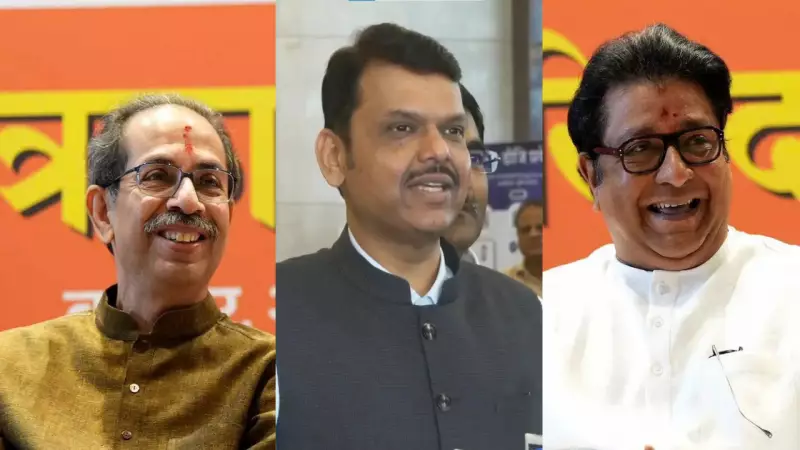
The reunited Thackeray cousins face an uphill battle. Their Sena (UBT)-MNS alliance trails in most exit polls, with Congress and NCP factions expected to play marginal roles. This election represents a prestige battle between the BJP-led Mahayuti and the Thackeray legacy.
Central Mumbai: The Symbolic Core
The Dadar-Parel and Worli-Sewri belt emerged as the election's symbolic heartland. This region houses Shiv Sena Bhavan and Aaditya Thackeray's assembly constituency, making it crucial for the Thackeray-led alliance.
Political observers note the Sena (UBT)-MNS combine must maintain a clean sweep here to offset losses elsewhere. Any breakthrough by the BJP-Shinde faction in this Marathi heartland would deal a psychological blow to the Thackerays' political legacy.
Campaign Dynamics and Defections
The election campaign witnessed sharp polarization around identity politics. Chief Minister Devendra Fadnavis's call for a Marathi and Hindu mayor became a flashpoint, while allegations of money distribution surfaced repeatedly.
Several high-profile defections complicated the political landscape. Former corporators and sitting MLAs switched sides in the run-up to polls, particularly affecting the Sena (UBT) in central Mumbai. In Worli alone, the party battles rebels in four out of six wards.
Civic Issues and Voter Expectations
Despite the political drama, Mumbai residents remained focused on practical concerns. Roads, traffic congestion, and basic infrastructure dominated voter expectations throughout the campaign. Many expressed frustration that local civic issues received inadequate attention amid political posturing.
Residents in several areas reported feeling disconnected from the electoral process, citing poor communication about polling changes and unresolved civic problems. This disengagement manifested in sluggish voting queues despite celebrity participation aimed at boosting turnout.
What Comes Next
As counting progresses throughout Friday, Mumbai awaits answers to crucial questions. Will the BJP-Shiv Sena alliance achieve the predicted clean sweep? Can the Thackeray-led opposition mount an unexpected fightback? The delayed counting process means the city must wait longer than usual for definitive results.

The outcome will determine control of India's richest civic body, with implications extending beyond municipal governance to state and national politics. Mumbai's political landscape stands at a potential turning point after three decades of Thackeray dominance.