

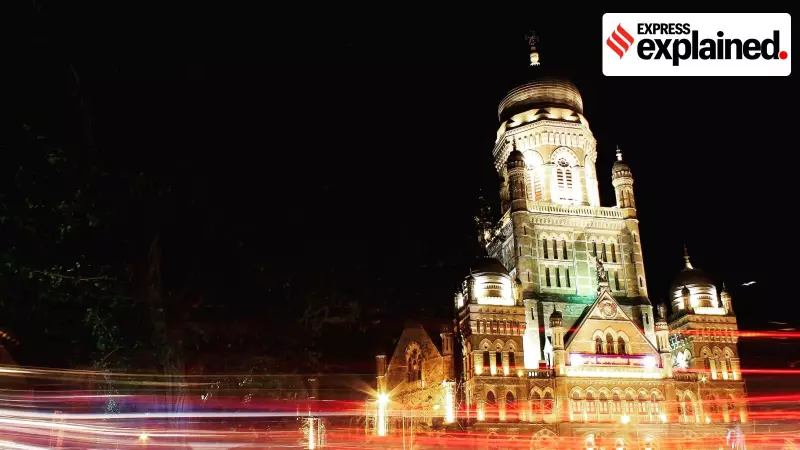
BMC Elections: The Significance of Mumbai's Civic Powerhouse
After a gap of nearly four years, the Brihanmumbai Municipal Corporation (BMC) elections are set for Thursday, January 15. This vote will restore an elected council to the institution that governs Mumbai's day-to-day operations and long-term development. Founded in 1865, the BMC stands as India's richest and most influential municipal body. Its decisions directly affect the quality of life for millions in Mumbai.
The Budget and Structure of the BMC
The BMC operates on an immense scale. With an annual budget of around Rs 74,000 crore, it controls more funds than several Indian states, including Goa, Sikkim, and Arunachal Pradesh. The corporation employs about 1.15 lakh people, making it one of the largest civic employers in the country.
The administration is led by the municipal commissioner, a senior IAS officer who holds executive powers. They receive support from four additional municipal commissioners and a joint municipal commissioner. The elected wing is headed by the mayor, but this role is largely ceremonial. Most decision-making authority rests with the commissioner.

Key Responsibilities of the BMC
As Mumbai's local government, the BMC manages essential services that residents rely on daily. These services include:

- Roads: The civic body builds and maintains Mumbai's 2,050 km road network. Its duties involve repairing damaged roads, fixing potholes, laying new roads, and ensuring smooth traffic flow. Currently, the BMC is converting around 700 km of roads into cement concrete at a cost of Rs 17,000 crore. This project aims to reduce potholes and enhance durability, especially during the monsoon season.
- Water Supply: Mumbai depends on seven lakes for drinking water: Tulsi, Vihar, Bhatsa, Tansa, Upper Vaitarna, Middle Vaitarna, and Modak Sagar. Only two of these lakes are within city limits. The BMC manages these lakes, filters the water, and supplies it through an extensive pipeline network. It also handles repairs, leakages, and system expansions as the city grows.
- Waste Management: Mumbai generates between 8,000 and 10,000 metric tonnes of garbage every day. The BMC collects waste from homes and public spaces, transports it to processing plants and landfills, and keeps roads clean. It maintains public toilets and treats sewage before releasing it into the sea and creeks.
- Public Health and Education: The BMC runs one of India's largest public healthcare systems. It operates four medical college hospitals, 16 general hospitals, four specialised hospitals, along with dispensaries and maternity homes. A large segment of Mumbai's population relies on these facilities for affordable treatment. During the Covid-19 pandemic, the BMC played a central role by setting up quarantine centres and large Covid care facilities. In education, the BMC runs more than 1,100 municipal schools, offering primary and secondary education. Many of these schools are now affiliated with the CBSE board and provide low-cost education to children from economically weaker sections.
- Building Infrastructure: The BMC constructs major infrastructure projects, including flyovers, bridges, subways, and key link roads. A notable example is the Mumbai Coastal Road, opened in 2024, which reduced travel time between Marine Drive and Bandra to under 10 minutes. Other major projects include the Goregaon Mulund Link Road and the next phase of the coastal road connecting Versova to Bhayandar. The BMC also maintains more than 340 bridges and skywalks across the city.
- Public Transport and Open Spaces: The BMC is the parent body of Brihanmumbai Electricity Supply and Transport (BEST), which runs over 2,500 buses in Mumbai and the suburbs. While BEST faces financial challenges, the BMC provides regular financial support. For the current year, the civic body has allocated Rs 1,000 crore to the transport undertaking. The BMC also manages 26 off-street parking lots and more than 350 on-street parking spaces. Additionally, it maintains over 800 gardens and open spaces across the city.
Funding Sources for the BMC
The BMC is one of India's biggest tax-collecting local bodies. Its primary income comes from property tax on residential, commercial, and industrial properties in Mumbai. Other revenue sources include water charges, sewerage charges, fees from building permissions, parking fees, and fines. It also earns from development charges paid by builders, advertisement fees, and grants from the state government. This strong revenue base enables the BMC to fund large infrastructure projects and public services without heavy reliance on the state government.
Why the BMC Elections Matter
With vast financial resources and wide-ranging responsibilities, the BMC has a direct impact on Mumbai's quality of life. Civic elections bring public accountability to decisions on spending, infrastructure, and services that affect citizens daily. As Mumbai votes on Thursday, the outcome will shape how the city is governed and developed in the coming years.





