

Chennai's Choolaimedu Roads: Hasty Relaying Creates New Hazards for Residents
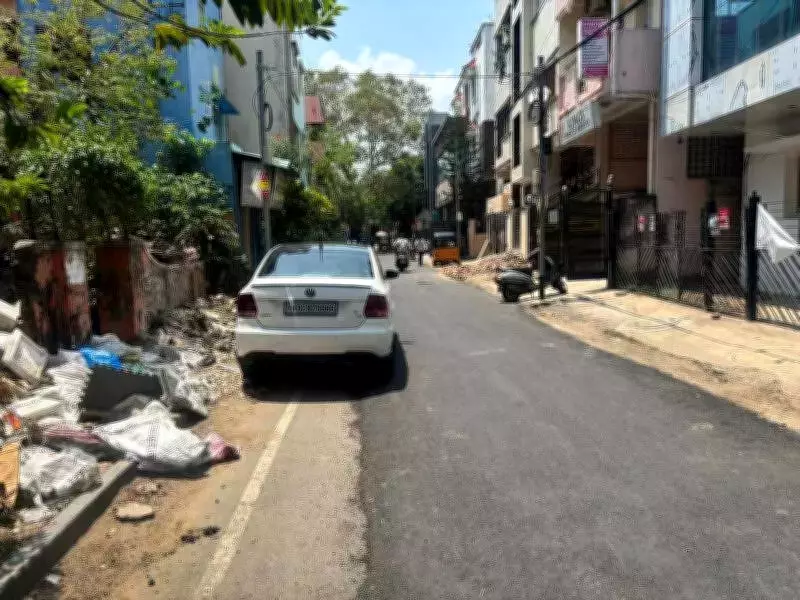
In a troubling turn of events, residents of Choolaimedu in Chennai found themselves trading one peril for another on Tuesday morning. Instead of the familiar potholes, they were confronted with unnaturally elevated, uneven, and crumbling roads following a hurried overnight relaying project by the Greater Chennai Corporation (GCC). This rushed effort has sparked significant concern and frustration among the local community.
Details of the Road Relaying Project
The GCC undertook the relaying of as many as four roads along the 2-kilometer Choolaimedu High Road stretch, covering Thiruvengadapuram Main Road, Ameerjan Street, Abdullah Street, and Khan Street. However, residents quickly pointed out that the corporation failed to follow standard procedures. According to Indian Roads Congress (IRC) norms, the existing bituminous surface must be milled to a depth of 40mm before relaying to ensure a uniform final road level. This critical step was reportedly skipped in many parts of Choolaimedu, leading to the current issues.
Impact on Residents and Infrastructure
What was intended to repair battered and crater-ridden roads has instead created new dangers. The road levels have been raised significantly, resulting in sharp edges at junctions and uneven gradients. In some areas, the freshly-laid bitumen has already begun to peel off, indicating poor workmanship. U Ganeshan, a resident, expressed his frustration, noting, "As the election nears, the corporation is hurriedly fixing patchy roads. They could have given us a heads-up: residents woke up to tar stains on their vehicles, which will cost at least 3,000 rupees to remove."

Lack of Coordination and Waste of Public Funds
Residents also highlighted a severe lack of coordination between different government departments. K Prakash, an advocate from Thiruvengadapuram 1st Street, revealed that several interior roads were dug up last month for Metrowater work, which remains incomplete. He warned, "Now roads have been relaid, but they may be dug up again once the pending work resumes. This is a waste of public money." This oversight raises questions about the efficiency and planning of municipal projects.
Official Response and Future Actions
In response to the complaints, Regional Deputy Commissioner H R Kaushik acknowledged that interior roads should have been milled before relaying. He assured, "The roads will be inspected and action will be taken." This statement offers a glimmer of hope for residents, but it underscores the need for stricter adherence to regulations and better oversight in future infrastructure projects to prevent such mishaps.






