

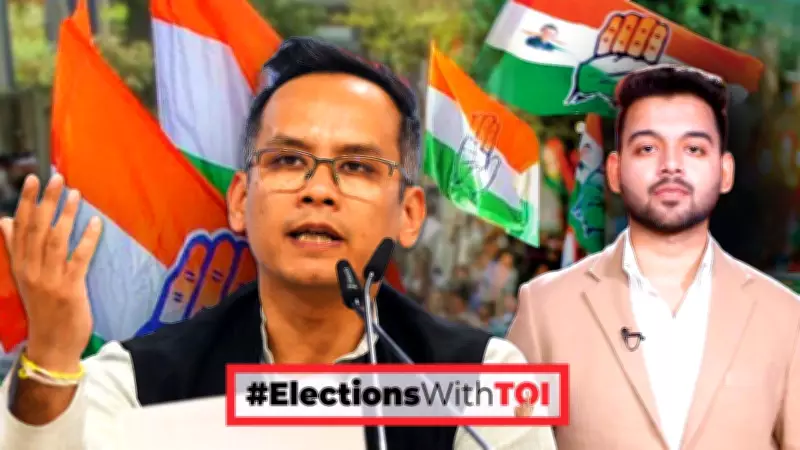
Congress's Strategic Gamble: Why Gaurav Gogoi is Central to Assam 2026
In a bold move to reclaim political ground in Assam, the Indian National Congress is placing its highest stakes on Gaurav Gogoi for the pivotal 2026 state elections. This strategic bet hinges on his unique blend of legacy, leadership, and voter appeal, positioning him as the linchpin of the party's ambitious comeback strategy in the northeastern state.
The High-Stakes Contest in Jorhat
Gaurav Gogoi has been fielded from the Jorhat constituency, setting the stage for a direct and intense electoral showdown with the formidable BJP Chief Minister, Himanta Biswa Sarma. This contest is not merely a local battle but a symbolic representation of the broader political struggle between the Congress and the Bharatiya Janata Party in Assam. The outcome in Jorhat is expected to serve as a critical barometer for the overall election results, with both parties investing significant resources and political capital into this key seat.
Gogoi's Multifaceted Appeal and Political Credentials
Gaurav Gogoi's candidacy is underpinned by several compelling factors that the Congress hopes will resonate with Assam's diverse electorate. His political lineage, as the son of the late and widely revered former Chief Minister Tarun Gogoi, provides a strong emotional connect and legacy advantage. Tarun Gogoi's enduring popularity, built over decades of governance, continues to cast a favorable shadow, potentially translating into voter trust and loyalty for his son.

Beyond his familial legacy, Gaurav Gogoi has carved out his own political identity through his tenure as a Member of Parliament and his active engagement in state and national issues. His leadership qualities are being highlighted as a counter to the incumbent BJP administration, with Congress strategists emphasizing his ability to bridge communities and address regional concerns.
Targeting Key Voter Blocs: Muslim and Indigenous Support
A critical component of Congress's strategy revolves around Gaurav Gogoi's perceived ability to attract and consolidate support from two pivotal voter blocs: the Muslim community and indigenous Assamese groups. His outreach efforts and policy stances are tailored to address the specific aspirations and grievances of these communities, which together form a substantial portion of the electorate. Successfully mobilizing these blocs could significantly alter the electoral arithmetic in Congress's favor.
Furthermore, Gogoi's broader voter appeal extends to urban and rural segments, with his campaign focusing on issues such as development, employment, and cultural preservation. This holistic approach aims to build a coalition that transcends traditional demographic boundaries, challenging the BJP's established voter base.
The Broader Implications for Congress's Comeback
The 2026 Assam elections represent a make-or-break moment for the Congress party, which has been out of power in the state since 2016. A strong performance, led by Gaurav Gogoi, could rejuvenate the party's prospects not only in Assam but across northeastern India. Conversely, a failure to make significant inroads might signal deeper structural challenges within the party's regional strategy.
As the election campaign intensifies, all eyes will be on whether Congress's calculated bet on Gaurav Gogoi can translate into electoral success. The results will offer crucial insights into the evolving political dynamics of Assam and the effectiveness of legacy-based campaigns in contemporary Indian politics.






