A recent social media post by Congress data analytics chief Praveen Chakravarty on Tamil Nadu's debt has ignited a fierce political debate, exposing deep fault lines within the party as it navigates a critical pre-election phase in the state.
The Spark: A Post That Went Beyond Fiscal Math
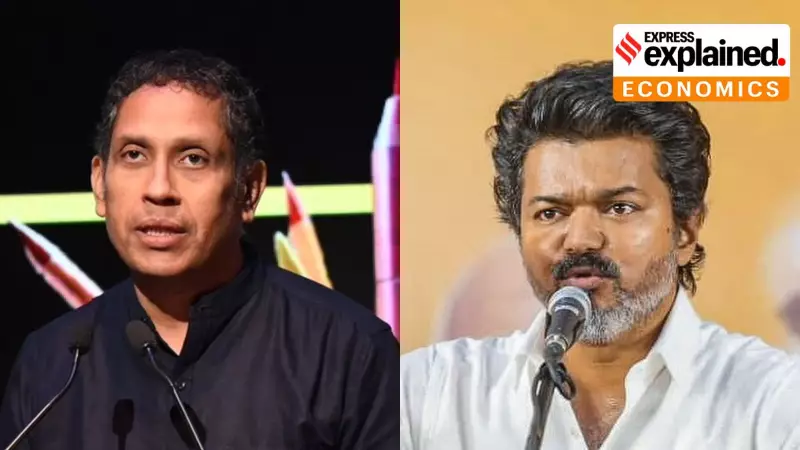
On December 28, 2025, Praveen Chakravarty, who heads the Congress's data analytics wing and the All India Professionals’ Congress, took to X (formerly Twitter) to flag Tamil Nadu's fiscal health. He described the state's debt position as "alarming", highlighting that it has the highest outstanding debt among all Indian states. He pointed out that while Uttar Pradesh had more than double Tamil Nadu's debt in 2010, TN now has higher debt than UP. He also noted Tamil Nadu's interest burden is the third highest after Punjab and Haryana, and its debt-to-GSDP ratio remains elevated compared to pre-pandemic levels.
However, the controversy stemmed less from the numbers and more from the timing and the messenger. The remarks came precisely when the Congress is initiating delicate seat-sharing negotiations with its longstanding ally, the Dravida Munnetra Kazhagam (DMK), for the 2026 Assembly elections. Furthermore, Chakravarty's recent confirmed meeting with popular actor-politician Vijay, founder of the Tamilaga Vettri Kazhagam (TVK), added a potent layer of political speculation, signaling to many a potential exploration of alternative alignments.
Experts Counter: Debt in Context of Growth
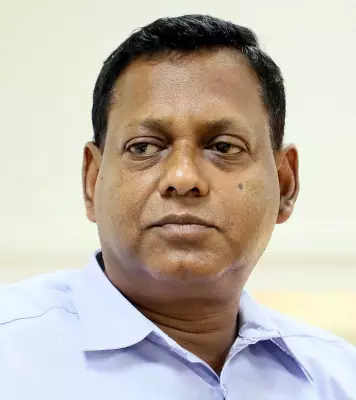
Economic experts were quick to provide context to Chakravarty's claims. M Suresh Babu, Director of the Madras Institute of Development Studies and a former adviser to the Prime Minister’s Economic Advisory Council, argued that viewing absolute debt figures in isolation is misleading. "What matters is not the size of the economy or debt in isolation, but how those numbers relate to underlying capacity," he told The Indian Express.
Babu emphasized that Tamil Nadu, with its strong manufacturing base, diversified services sector, and high urbanisation, has the capacity to service debt. He noted the state is one of the fastest-growing in India, and its ability to repay is embedded in that growth trajectory. "Globally, many advanced economies carry high levels of debt. What determines sustainability is not the number itself, but whether that debt is productive," he explained, calling the recent commentary "somewhat sensationalised." He also stated that Tamil Nadu has largely stayed within Fiscal Responsibility and Budget Management (FRBM) norms despite shrinking fiscal space for all states.
The Real Drama: Internal Congress Anxieties and Alliance Jitters
The economic debate quickly faded into the background, overtaken by the raw political nerves it touched. Senior Congress leaders in Tamil Nadu admit that a section of the party has grown restless with its subordinate role within the DMK-led alliance. Having ruled the state until 1967, the Congress has since failed to expand its organisational footprint, relying on coalition politics for relevance.
Chakravarty's actions—the debt post and the meeting with Vijay—were interpreted by many as a deliberate signal from a faction seeking to break from the DMK. This group, which reportedly includes leaders like Manickam Tagore and Tamil Nadu Congress Legislature Party leader S Rajesh Kumar, is said to be pushing for a realignment. They are believed to be backed by senior central leader K C Venugopal, who sees potential in a Vijay-led formation.
"It creates confusion," lamented one senior Tamil Nadu Congress leader, while another accused Chakravarty of doing "unpardonable things to the DMK government." This internal pressure prompted a swift and public intervention from senior leader P Chidambaram. On January 2, 2026, the former finance minister firmly reaffirmed the Congress's commitment to the DMK alliance, dismissing individual statements and citing central data showing Tamil Nadu's high nominal growth.
Privately, leaders acknowledged Chidambaram's move was necessary to cool tempers and draw a clear line. However, the episode highlights a party at a crossroads: the Delhi leadership appears cautious, while a section of the state unit is impatient, fearing irrelevance and eyeing what they believe could be a more lucrative alliance with Vijay's TVK, which might also offer benefits in Kerala due to the actor's fanbase there.
The DMK, for its part, is deeply unsettled by these developments, especially the perceived reluctance of the Congress high command to rein in what looks like a parallel political engagement. As one senior Congress leader summed up the faction's pitch, "a section is trying to make Rahul Gandhi believe that Vijay is going to be the next Tamil Nadu CM, and alliance with TVK will ensure a Congress CM in Puducherry, and the same will improve Congress chances in Kerala too." The coming months will reveal whether fiscal arguments were merely a pretext for a deeper political recalibration.