

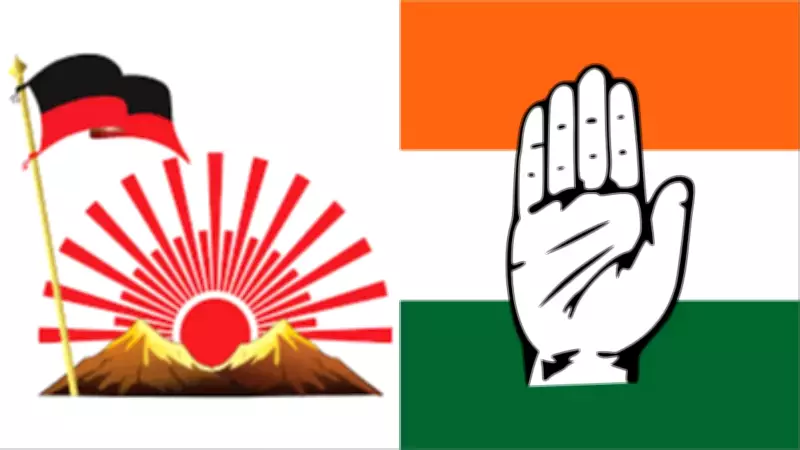
Congress-DMK Alliance Faces Turf War in Puducherry Seat-Sharing Talks
Tension is simmering within the Congress-DMK alliance as high-stakes seat-sharing negotiations intensify ahead of Puducherry's crucial assembly elections scheduled for April 9. The two major political partners are clashing over electoral turf in the union territory's 30 directly elected assembly seats, with both sides adopting aggressive stances that threaten to destabilize their long-standing partnership.
Seat-Sharing Demands Create Major Friction
In the 2021 elections, the alliance had settled on a formula where Congress claimed 14 seats while DMK took 13, with two junior allies splitting one seat each and an independent candidate rounding out the pact. However, this time Congress is pushing aggressively for 21 seats—leaving just nine for DMK—which has countered with its own demand for 15 constituencies. This significant gap in expectations has created substantial friction between the alliance partners as they attempt to finalize their electoral strategy.
Alliance's Rollercoaster Electoral History
The Congress-DMK partnership has experienced dramatic ups and downs since first teaming up in 2006, five years after clashing in rival political fronts. In their initial collaboration, they fielded 16 Congress candidates and 11 DMK candidates, handing three seats to junior allies, and swept to power with a convincing victory.

They repeated this successful formula in 2011 with 17 Congress and 10 DMK candidates but suffered defeat against the AINRC-AIADMK combine. By 2016, they went all-in on all 30 seats with 21 Congress and 9 DMK candidates and reclaimed victory. Yet 2021 brought heartbreak when the AINRC-BJP alliance triumphed despite the Congress-DMK partnership presenting a united front.
DMK's Strong Performance Gives It Leverage
DMK's 2021 performance provides significant leverage in current negotiations—the party secured six seats compared to Congress's mere two, earning the Leader of the Opposition post for the MK Stalin-led party. With Puducherry's 33-member assembly comprising 30 elected members and three nominated by the Centre, Stalin's team is unlikely to easily cede ground to a partner that underdelivered in the previous election.
Multi-State Showdown Adds Pressure
Vote counting for Puducherry's assembly elections hits May 4, synchronizing with results from Assam, Kerala, Tamil Nadu, and West Bengal—making this a pivotal multi-state political showdown that adds pressure to alliance negotiations. As talks continue to drag on, the clock ticks inexorably toward polling day, with both parties needing to resolve their differences quickly to mount an effective campaign.
The ongoing negotiations highlight the complex dynamics of alliance politics in India's multi-party democracy, where historical partnerships must constantly adapt to changing electoral realities and performance metrics. The outcome of these talks will significantly impact not just Puducherry's political landscape but could also influence alliance strategies in other states going to the polls simultaneously.






