Congress-DMK Alliance Faces Internal Rift Over Power Sharing in Tamil Nadu
The simmering debate over power sharing in Tamil Nadu has ignited not only friction between the Congress and its ally, the DMK, but also exposed a sharp internal rift within the Congress itself. State leadership is moving swiftly to rein in dissenting voices as Chief Minister MK Stalin draws a firm red line on the issue of coalition governance.
Public Rebuke and Internal Warnings
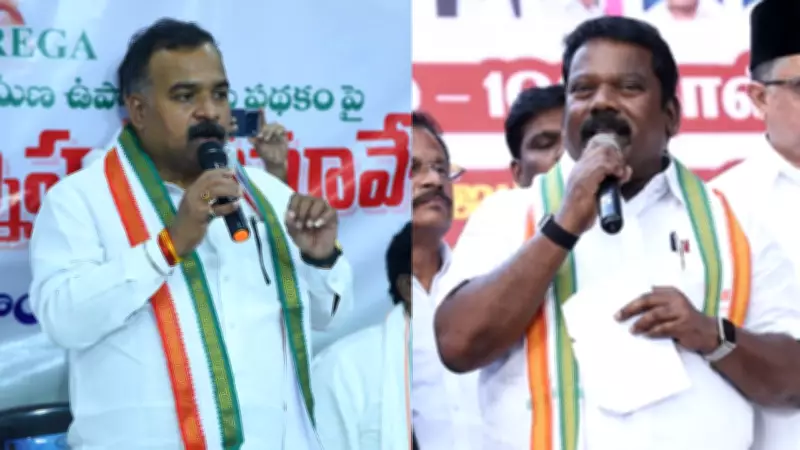
Tamil Nadu Congress Committee (TNCC) president K Selvaperunthagai publicly rebuked party MP Manickam Tagore on Monday for raising the power-sharing issue at a district-level meeting in Madurai. Selvaperunthagai pointedly questioned whether anyone in the party considered themselves "bigger than the AICC leadership". This warning comes amid renewed strain in the Congress-DMK relationship, after CM Stalin dismissed demands for a share in governance as a "conspiracy", while insisting the alliance remains intact.
Selvaperunthagai stated that the All India Congress Committee (AICC) had issued clear instructions not to discuss alliance matters publicly. "Our leaders Rahul Gandhi, Mallikarjun Kharge, and KC Venugopal have clearly asked us not to express views on alliances in public. I strictly follow those instructions," he told PTI. He added that airing such views ahead of assembly elections only creates confusion. This response followed a February 15 meeting of the Madurai South District Congress Committee, led by Tagore, which reportedly passed resolutions seeking power sharing with the DMK.

While Selvaperunthagai claimed unawareness of these resolutions, he emphasized that the party had already formed a five-member committee under Girish Chodankar to handle seat-sharing talks with the DMK, and all discussions must remain within that framework.
Mixed Messaging Within Congress
Meanwhile, Congress MP Karti Chidambaram clarified in an ANI interview that the party remains committed to the INDIA bloc and its alliance in Tamil Nadu, led by the DMK. "We are in an INDIA alliance. We have to look at it from a national perspective. The DMK is a very important part of the INDIA alliance nationally because they contribute a significant number of MPs to our bloc. And we are part of the INDIA alliance in Tamil Nadu, which the DMK leads. The Chief Minister has categorically confirmed the alliance, and there's no doubt about that," he said.
Chidambaram acknowledged that long-standing alliances may have inherent tensions and expectations, but argued it would not be pragmatic to exit a stable formation. "The DMK is a well-oiled political machine. To somehow get minor issues and ditch that, in my opinion, will not be pragmatic. There are voices within the Congress party which are giving other options. As an active political party, we will notice what's happening around us," he added.
DMK's Firm Stance and Historical Context
The internal rebuke follows Tagore's sharp public pushback against Stalin's remarks. After the CM termed the power-sharing demand a "problem created by some people" and alleged a conspiracy to create a rift, Tagore responded on X: "How is it that seeking, in a spirit of friendship, a role (a share) in work to serve the people could be termed as conspiracy?" This post signaled that at least a section of Congress is unwilling to back down, despite the DMK's categorical stance.
Stalin, however, left little room for ambiguity. While reiterating that the Congress-DMK alliance is "in harmony" and free of confusion, he firmly ruled out sharing power with allies. "It will not work in Tamil Nadu; they know it too. Rahul Gandhi is not worried either," he said, asserting DMK dominance while avoiding direct confrontation with the Congress high command.
The DMK has since doubled down on this position. Senior party leader and state forests minister RS Rajakannappan bluntly stated that the DMK does not run on the strength of alliances. Invoking history, he asked whether former CM Kalaignar Karunanidhi ever shared power despite winning over 100 seats, adding that a future DMK government under Stalin would follow only the "Dravida model".

Congress's Cautious Approach
Within the Congress, messaging remains mixed. While Tagore and others argue that the question of single-party versus coalition governance should be left to the people, state leadership opts for caution. Selvaperunthagai maintains there is "no opportunity" for a crack in the alliance and that all views will eventually be discussed by AICC leadership and the chief minister.
This unfolding scenario highlights the delicate balance in Tamil Nadu politics, where alliance dynamics are tested by internal dissent and firm leadership stances, setting the stage for potential shifts ahead of upcoming elections.