Congress Legislators Demand Review of Karnataka's Guarantee Schemes to Ease Fiscal Strain
In Bengaluru, the Karnataka government is under renewed pressure from its own Congress party members to reassess its flagship guarantee schemes as the state budget approaches on March 6. Several party legislators and ministers are advocating for a more targeted approach, arguing that benefits should be restricted to economically weaker sections to alleviate the significant fiscal burden on the state's finances.
Growing Concerns Over Broad Eligibility and Fiscal Impact
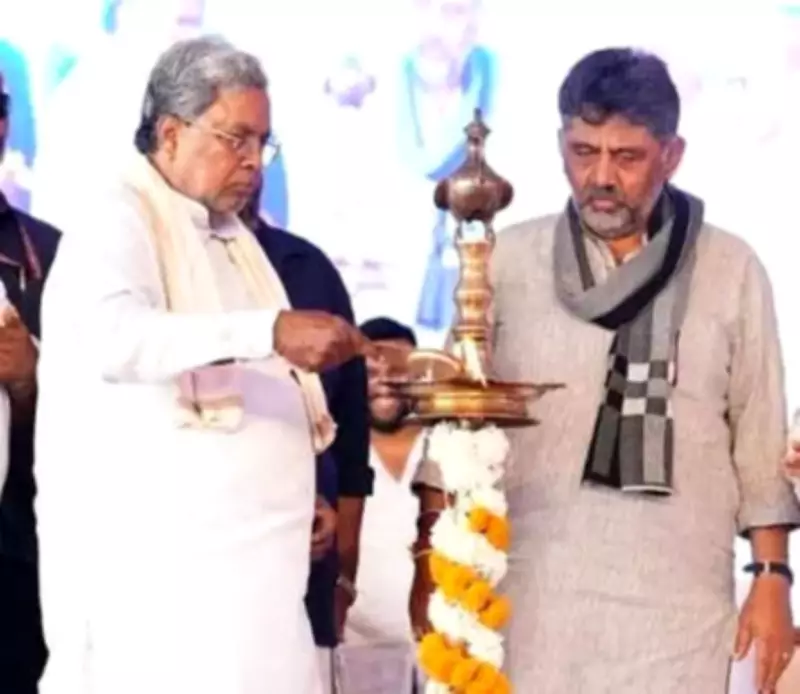
Many Congress MLAs have expressed that the schemes, which were pivotal in securing the party's decisive victory in the 2023 assembly elections, are currently too inclusive, extending support even to households that do not require state assistance. Some legislators have proposed a "give it up" initiative, encouraging affluent beneficiaries to voluntarily opt out, thereby reallocating resources to those in genuine need. This internal debate has intensified following recent observations by the Supreme Court regarding state-funded freebies, raising questions about whether Chief Minister Siddaramaiah's administration will introduce eligibility filters or other modifications.
The five guarantee schemes include Gruha Jyoti for free electricity up to 200 units per household, Shakti for free bus travel for women, Gruha Lakshmi for monthly cash transfers to women heads of households, Yuva Nidhi for unemployment assistance, and Anna Bhagya for free food grains. Collectively, these initiatives cost the state between Rs 55,000 crore and Rs 60,000 crore annually. Public Works Minister Satish Jarkiholi noted last year that excluding wealthy individuals from these schemes could potentially save at least Rs 10,000 crore per year. Industry and Infrastructure Minister MB Patil has also endorsed revising eligibility norms to focus specifically on below-poverty-line households.

Fiscal Challenges and Revenue-Raising Measures
The fiscal debate surrounding these guarantees has persisted since the government's initial year in office. Initially, a senior bureaucrat recommended implementing the schemes in phases due to an estimated annual cost of around Rs 50,000 crore, but the Congress leadership opted for a full rollout, emphasizing these guarantees as a key electoral promise. In response to the financial strain, the state has enacted multiple revenue-raising measures, including increases in bus fares, fuel prices, property guidance values, stamp duty, liquor prices, and vehicle cess. Additionally, proposals to raise water tariffs, milk prices, and public transport fares have been considered.
The government also introduced a mineral rights tax law and a one-time settlement scheme, though these have had limited impact on revenue generation. For the 2025–26 budget, the government allocated approximately Rs 51,034 crore for the five guarantee schemes, a slight decrease from the Rs 52,009 crore provided in 2024–25. The total estimated expenditure for 2025–26 was set at just over Rs 4 lakh crore, with revenue expenditure around Rs 3.1 lakh crore, capital expenditure at Rs 71,336 crore, and Rs 26,474 crore allocated for loan repayment. The state planned to borrow about Rs 1.2 lakh crore, with total liabilities projected to rise to Rs 7.6 lakh crore.
Political Implications and Future Outlook
Last year, several ministers and MLAs publicly voiced concerns about diminishing funds for constituency-level development projects, though Siddaramaiah has firmly ruled out scrapping the guarantee schemes. With a series of local body elections, including those for the Greater Bengaluru Authority, scheduled for this year, the debate is resurfacing. While some MLAs argue that limiting benefits would create fiscal space for development spending, the government maintains that these schemes have stimulated economic activity. Siddaramaiah stated, "These are strategic investments made on economic and social principles. This has helped the state improve its per capita income."
The ongoing discussions highlight the delicate balance between fulfilling electoral commitments and managing fiscal sustainability, as Karnataka navigates its budgetary priorities amidst growing internal and external pressures.