

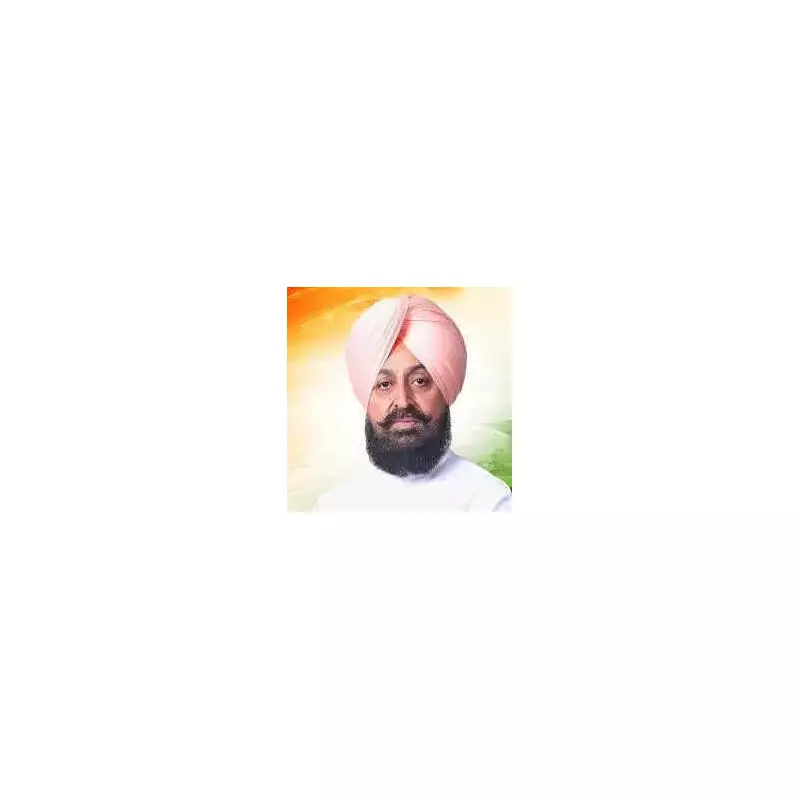
Senior Congress leaders in Punjab launched a scathing attack on both the BJP-led central government and the state's AAP administration during nationwide protests on Thursday. The demonstrations, part of the 'MNREGA Bachao Sangram', were held in Gurdaspur and Tanda, with Leader of Opposition Partap Singh Bajwa leading the charge against the recent replacement of the Mahatma Gandhi National Rural Employment Guarantee Act (MGNREGA) with the VB-G RAM G scheme.
Accusations of Undermining Federalism and Rights
Addressing the gatherings, Partap Singh Bajwa censured the two governments, accusing them of jointly undermining the constitutional right to work, the principles of federalism, and the dignity of the poor. He asserted that the new VB-G RAM G bill was forced through without adequate consultation or meaningful parliamentary debate.
Bajwa warned that the legislation fundamentally alters the nature of the employment guarantee. "It converts a demand-driven legal entitlement into a centrally controlled, allocation-limited scheme," he said. He argued that this shift dilutes federalism, unfairly shifts the financial burden onto states, and strips workers of their enforceable rights. Drawing a parallel to the controversial farm laws, he added, "It reflects the same arrogance that the country witnessed during the imposition of the now-repealed farm laws."

Congress Defends Its Legacy, Modi Faces Criticism
Congress Punjab in-charge Bhupesh Baghel, who also spoke at the rallies, claimed that it is the Congress party that has consistently championed the cause of working people and marginalised sections. He highlighted that MGNREGA, launched by the Congress government in 2005 under the guidance of Sonia Gandhi and Dr. Manmohan Singh, was globally praised as a pioneering pro-poor initiative.
Echoing this sentiment, Punjab Congress president Amrinder Singh Raja Warring alleged that Prime Minister Narendra Modi had shown hostility towards MGNREGA from day one, often describing it as a failure. "The fact is that MGNREGA was accepted and acknowledged as the best rural employment generation scheme across the world," Warring stated.
A Look Back at MGNREGA's Achievements and a Warning for Punjab
Bajwa recounted the historic significance of MGNREGA, enacted nearly two decades ago. He emphasized that it was established not as charity, but as a legal right guaranteeing work, wages, and dignity to rural households, particularly benefiting Dalits and women. "The law was the outcome of a year-long consultative process... and enjoyed rare bipartisan consensus. That consensus was clear—work is not charity, work is a right," he remarked.
He listed the scheme's transformative achievements for rural India:
- Guaranteeing 100 days of employment.
- Raising rural wage levels.
- Reducing poverty and checking distress migration.
- Empowering women significantly.
Directing his advice to the Punjab government, Bajwa urged it to rationalise expenditure, curb wasteful spending on publicity, and make adequate budgetary provisions to sustain rural employment. Taking a sharp jibe at the central government's tightened control, he concluded, "This is no longer G RAM G. It has become G Modi G, where states are forced to depend entirely on the Centre for funds and even for deciding what works will be undertaken." The protest signals a deepening political conflict over welfare schemes and the balance of power between the Centre and the states.






