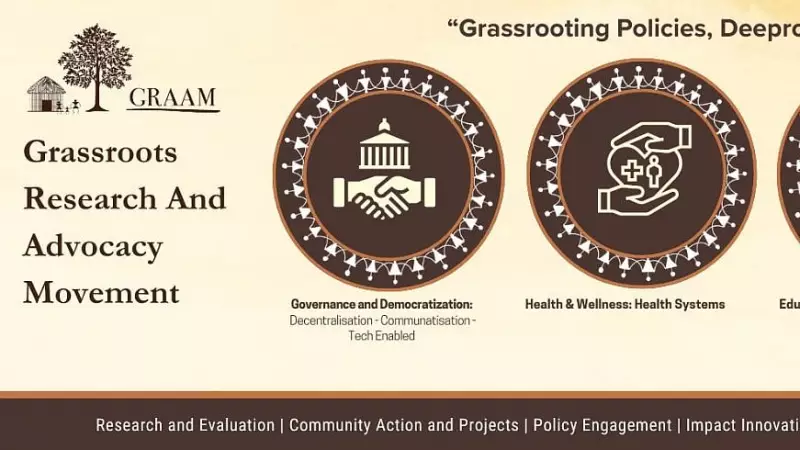
The political landscape in Karnataka witnessed a fresh controversy as the Congress party raised serious questions about the neutrality of a recent election survey conducted by the Grassroots Research and Advocacy Movement (GRAAM). The research body, however, has firmly defended its integrity, stating it maintains a strictly professional approach with no political allegiance.
Congress Alleges Conflict of Interest
The core of the Congress party's accusation revolves around a perceived conflict of interest. The party pointed out that GRAAM's founder, R Balasubramaniam, holds a position within the union government. This association, Congress argues, potentially compromises the independence and impartiality of the survey's findings, which are often influential in shaping public narrative ahead of elections.
The allegations bring into focus the critical issue of credibility in poll-related research, especially when entities involved have ties to ruling dispensations. The timing of the survey and its potential impact on public opinion in Karnataka has made this a significant point of political contention.
GRAAM's Firm Rebuttal on Professionalism
In a strong response to the allegations, GRAAM has categorically denied any bias. The organization emphasized its commitment to rigorous, data-driven methodology. "We are professional and have no political allegiance," was the clear stance presented by the advocacy group.
GRAAM clarified that its work is grounded in empirical research and robust analysis, designed to reflect ground realities without external influence. The body sought to distinguish its founder's individual professional role from the organization's collective, independent research ethos. The statement aimed to reassure stakeholders about the sanctity of its survey processes and its dedication to non-partisan analysis.
Implications for Karnataka's Political Discourse
This exchange, reported on 02 January 2026, underscores the heightened sensitivity surrounding election surveys in India's vibrant democracy. For voters and political analysts in Karnataka, such disputes highlight the challenge of identifying objective research amidst a clamour of competing claims.
The incident prompts broader questions about transparency and the governance structures of think tanks and research agencies involved in politically sensitive work. It also sets the stage for how similar organizations might proactively disclose potential conflicts to maintain public trust. The credibility of future surveys and their reception by various political parties and the electorate may be influenced by the outcome of this debate.
As Karnataka remains a key battleground state, the integrity of data and research influencing its political narrative is paramount. This controversy between the Congress party and GRAAM is likely to fuel further discussions on establishing clear ethical frameworks for policy research and election surveys in the country.