

Maharashtra Congress President Criticizes Government's Handling of Ashok Kharat Case
In a significant development, Maharashtra Congress president Harshwardhan Sapkal has publicly questioned the state government's handling of the controversial Ashok Kharat case, alleging substantial delays in taking action despite early warnings and calling for more rigorous investigation measures to be implemented immediately.
Allegations of Government Delay and Inaction
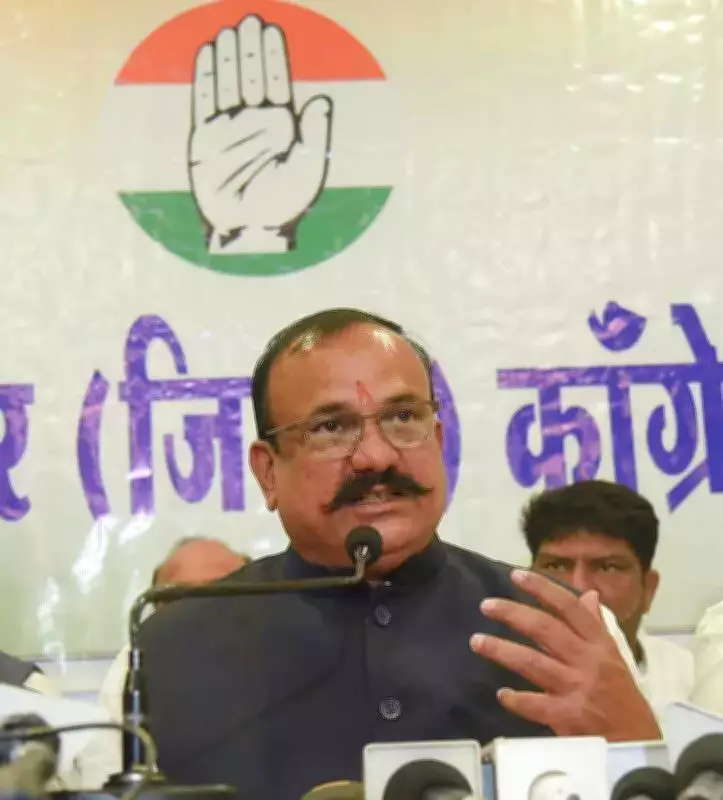
Speaking to media representatives in Buldhana on Tuesday, Sapkal made serious allegations regarding the timeline of the case. He stated that Chief Minister Devendra Fadnavis had received information about the allegations against self-styled godman Ashok Kharat around Diwali last year, when initial misconduct reports began surfacing in October and November.
"Kharat's misconduct already came to light in October and November, and the home department was actively gathering evidence during that period," Sapkal emphasized during his media interaction. "What was the Chief Minister doing for six entire months while this evidence was being compiled? This delay raises serious questions about the government's commitment to addressing such sensitive matters promptly."

Call for Strengthened Investigation and Systemic Reforms
The Maharashtra Pradesh Congress Committee (MPCC) chief asserted that the case has triggered what he described as "disturbing discourse" throughout Maharashtra and urged the BJP-led state government to substantially strengthen the ongoing probe. He presented specific recommendations for improving the investigation process.
"The government must provide additional support to the Special Investigation Team, form a dedicated task force specifically for this case, and ensure strict action against all accused individuals to bring this matter to a proper conclusion," Sapkal declared, outlining his demands for more robust investigative measures.
Broader Concerns About Governance and Social Issues
Sapkal further alleged that the government appeared to be deliberately prolonging the case rather than seeking swift resolution. He noted that while former State Women's Commission chairperson Rupali Chakankar has resigned from her position, serious questions remain about whether other individuals connected to the case will face appropriate consequences.
"Cases must be registered against all those involved in this matter, without exception or favoritism," he insisted, calling for comprehensive accountability.
Connecting the episode to wider social concerns, Sapkal described the situation as a product of persistent superstition within society. "Our society must learn important lessons from this incident and adopt a more scientific temperament in our approach to such matters," he advised, adding that divisive narratives and unscientific thinking contribute significantly to such incidents.
In a poignant reference, Sapkal mentioned late rationalist Narendra Dabholkar, stating: "He fought his entire life against superstition and irrational beliefs. His important work must be carried forward with renewed vigor so that such distortions do not emerge again in our society."
Additional Governance and Corruption Concerns Raised
Expanding his critique to broader law and order issues, the MPCC chief cited a recent incident in Satara during Zilla Parishad elections, where Shiv Sena ministers Shambhuraje Desai and Makarand Patil reportedly claimed they were "manhandled by police personnel."
"The fact that government ministers themselves are allegedly being beaten raises serious concerns about governance and public safety," Sapkal commented, adding that the episode has also revived allegations of voting irregularities that require thorough investigation.
Turning to corruption allegations, Sapkal specifically targeted Shiv Sena MLA Sanjay Gaikwad, demanding complete transparency in development expenditure and questioning the concentration of contracts among relatives. He raised concerns about the sources of rapidly increasing assets and called for detailed financial disclosures.

"A comprehensive white paper should be released detailing village-wise spending patterns and financial allocations," he demanded, also seeking clarity on land reportedly earmarked for housing economically disadvantaged communities.
Systemic Issues Requiring Immediate Attention
In his concluding remarks, Sapkal asserted that both the Ashok Kharat case and the broader corruption concerns point to significant systemic issues within Maharashtra's governance framework that require prompt, transparent, and decisive action from the state administration.
"These are not isolated incidents but rather symptoms of deeper problems that must be addressed through comprehensive reforms and greater accountability mechanisms," the Congress leader emphasized, calling for immediate governmental response to restore public confidence in administrative processes.





