

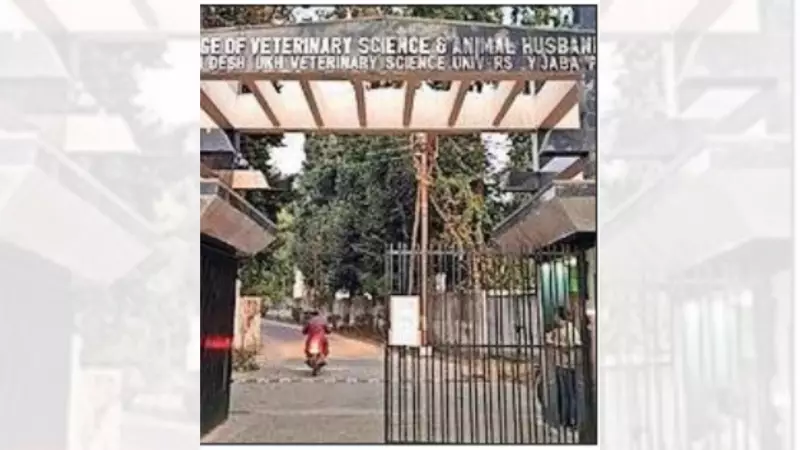
An ambitious government-funded research project in Madhya Pradesh, aimed at exploring the potential of cow products like dung and urine to combat cancer, has been exposed as the centre of a major financial scandal. Instead of groundbreaking medical findings, the scheme fuelled alleged misappropriation of crores of rupees at the Nanaji Deshmukh Veterinary Science University in Jabalpur.
Investigation Uncovers Widespread Fund Misuse
Following complaints about the suspected diversion of money, Jabalpur District Collector Raghvendra Singh ordered a detailed inquiry. A two-member committee, led by Additional Collector R S Marawi, was formed to scrutinise the accounts of the Panchgavya research project. The preliminary investigation found that a significant portion of the research grant was spent on expenses completely unrelated to the scientific study.
"During preliminary scrutiny of documents, it was found that the research money was spent on purposes not related to the project," Marawi confirmed to the media. The committee's findings paint a picture of blatant financial irregularities under the guise of scientific research.

Where Did the Research Money Actually Go?
The probe committee itemised several questionable expenditures charged to the research fund. A car was purchased outright using the grant money. Furthermore, nearly Rs 15 lakh was spent on vehicle repairs, petrol, and diesel, raising serious questions about the project's logistical needs.
Additionally, about Rs 3 lakh was allocated for air travel, despite investigators finding no evidence or documentation for any research-related tours that would justify such expenses. The financial mismanagement extended to procurement as well.
The committee discovered that nearly Rs 1.75 crore was spent on raw materials and machines. Shockingly, these items were procured at rates deemed to be many times higher than the prevailing market prices, suggesting possible over-invoicing or corrupt procurement practices.
On top of this, about Rs 15 lakh was used for buying furniture and electronic items, and nearly Rs 5 lakh was paid under various other miscellaneous heads. All these payments were drawn from the dedicated research fund.
Project History and Official Response
The Panchgavya research scheme was initiated back in 2011 after the state government sanctioned Rs 3.5 crore. The objective was to conduct serious research into fighting diseases like cancer using Panchgavya components, primarily cow dung (gobar), cow urine (gau mutra), and milk.
When contacted about the investigation's findings, the university's Vice-Chancellor, Mandeep Sharma, stated that the research programme had concluded in 2018. He claimed that all technical and financial records were duly approved during the project's operational period.
"We are gathering details of the project and will officially share information with the media after reviewing the records," Sharma said. This response comes after the inquiry report has already been submitted to the district collector for further administrative action.
Awaiting Administrative Action
With the damning report now on the table, the ball is in the administration's court. Additional Collector Marawi confirmed that the findings have been formally submitted and that the decision on any further action, which could include disciplinary proceedings or a police complaint, will be taken at the appropriate administrative level.
This case highlights a severe breach of trust and a waste of public funds earmarked for innovative healthcare research. The scandal has not only derailed a potentially valuable study but has also raised significant questions about oversight and accountability in government-funded university projects.






