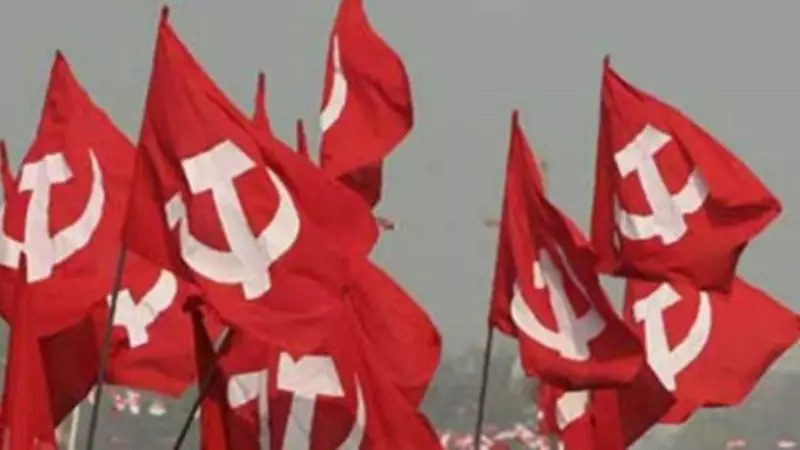
In a significant political development, the Communist Party of India (Marxist) has firmly shut the door on any potential electoral understanding with the Congress party to form administrations in key local bodies in Kerala. This decision comes in the wake of recent election results that saw the Bharatiya Janata Party making substantial gains, particularly in the Thiruvananthapuram Corporation and the Palakkad municipality.
No Compromise Despite BJP's Emergence
The announcement was made by CPI(M) state secretary M V Govindan on Monday following a meeting of the party's state secretariat. The meeting was convened to analyze the outcomes of the local body elections. Govindan was unequivocal in his statement, declaring that there would be "no horse trading" and that the party would accept the people's verdict.
"Our decision is to accept the verdict. CPI(M) does not require power for survival. There would be no understanding with the Congress to keep the BJP out of power," Govindan told the media. This stance highlights the complex dynamics within the INDIA bloc, where the CPI(M) and Congress are allies at the national level but remain fierce competitors in Kerala's political arena.
Electoral Arithmetic and Political Dilemma
The election results have created a delicate balance of power in several crucial urban local bodies. In the Thiruvananthapuram Corporation, the BJP emerged as the single largest party by winning 50 wards. The combined strength of the CPI(M) and Congress stands at 48 seats, with two independents holding the key to power.
A similar scenario unfolded in the 53-member Palakkad municipality council. Here, the BJP secured 25 members, while the CPI(M) with 8 and the Congress with 17 members together match that number. Three independents are also part of this council. While local leaders from both the Congress and the Left Democratic Front (LDF) had reportedly considered joining forces to block the BJP, the state leaderships have apparently vetoed the idea.
Sources indicate that both major parties fear such an alliance could become a major political liability with the Kerala Assembly elections just four months away. An open coalition with their arch-rival could confuse their respective voter bases and be exploited by opponents.
Broader Implications and Fringe Group Dynamics
The political calculus is further complicated in several panchayats and block panchayats where mainstream parties failed to secure a clear majority. In these areas, fringe groups like the Jamaat-e-Islami's Welfare Party of India and the Social Democratic Party of India (SDPI), linked to the banned Popular Front of India (PFI), have become kingmakers.
Both the Congress and the CPI(M) are expected to tread very cautiously regarding any dealings with these groups. They are keenly aware that any perceived links could be weaponized as a potent campaign issue during the high-stakes assembly polls.
CPI(M) Analysis and Denial of Anti-Incumbency
Addressing the media, Govindan also dismissed suggestions that anti-incumbency against the state's LDF government played a role in the electoral setbacks. He pointed to the party's performance in seven of the 14 district panchayats where voting patterns remained consistent.
"There is no anti-government sentiment. The government has unparalleled achievements. Despite the government performing very well, there was an electoral setback. How the people have viewed the achievements of the government will be examined," he asserted. He added that the district panchayat results demonstrated that the party's core base remains intact.
Govindan stated that the party would conduct a thorough review of the setbacks in specific regions, notably central Kerala, where Christian voters are influential, and Malappuram, a Muslim-majority district. When questioned about whether the recent Sabarimala gold smuggling scandal impacted the results, he confirmed, "The party will examine that as well."
The CPI(M)'s firm stance sets the stage for a politically volatile situation in Kerala's local governance. It signals that the battle lines for the upcoming assembly elections are already being drawn, with both the Left and the Congress prioritizing their distinct political identities over short-term administrative gains, even if it risks allowing the BJP to gain a foothold in key urban centers.