

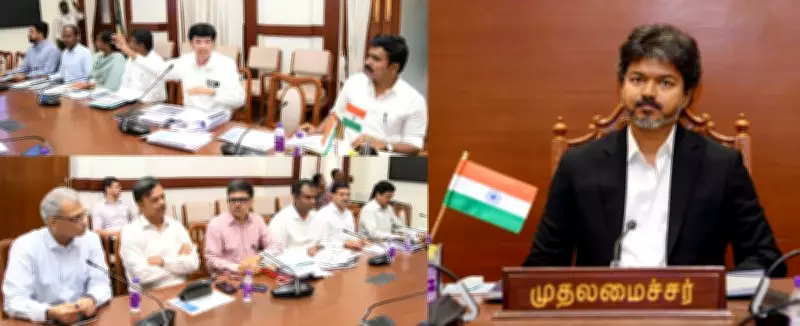
The Communist Party of India (Marxist) has issued a stern warning to the Tamil Manila Congress (TVK), stating that if the party accommodates rebels from the All India Anna Dravida Munnetra Kazhagam (AIADMK) in its cabinet, the CPIM will reconsider its support to the government. This development has added a new layer of complexity to the already volatile political landscape in Tamil Nadu.
Background of the Political Standoff
The TVK, a key ally in the ruling coalition, has been under pressure from various quarters to include AIADMK dissidents in the council of ministers. These rebels have been seeking a larger role in the government after parting ways with the AIADMK. However, the CPIM has firmly opposed this move, arguing that it would undermine the ideological integrity of the coalition and reward defectors.
In a statement released by the state secretary of CPIM, the party made it clear that any such inclusion would be seen as a breach of trust. The CPIM has been a consistent supporter of the TVK-led government, but it draws a red line when it comes to accommodating those who have switched sides from the opposition.

CPIM's Stance and Political Implications
The CPIM's warning is not just a routine political maneuver but a reflection of deeper ideological differences. The party has historically opposed the AIADMK's policies and considers its rebels as opportunists. By threatening to withdraw support, the CPIM aims to assert its influence within the coalition and prevent the TVK from drifting towards what it perceives as a more centrist or right-leaning stance.
Political analysts believe that this move could have significant repercussions. The TVK, which relies on the CPIM's support to maintain its majority, may have to choose between accommodating the AIADMK rebels and risking the collapse of the government. Alternatively, the TVK could attempt to placate the CPIM by offering concessions in other areas, such as policy decisions or administrative appointments.
Reactions from Other Political Parties
The AIADMK, while officially condemning the CPIM's stance, has privately welcomed the rift within the ruling coalition. The party sees this as an opportunity to regain political ground by projecting itself as a victim of political betrayal. On the other hand, the DMK, the main opposition party, has remained cautious, waiting to see how the situation unfolds.
Smaller parties in the coalition have also expressed concern over the escalating tension. Some have called for a meeting of all alliance partners to resolve the issue amicably. However, the CPIM has remained firm in its position, insisting that the TVK must not compromise on the principles that brought the coalition together.
Possible Scenarios and Future Outlook
If the TVK decides to go ahead with the inclusion of AIADMK rebels, the CPIM may follow through on its threat and withdraw support. This could lead to a political crisis, potentially forcing the government to seek a vote of confidence. Alternatively, the TVK could postpone the decision to avoid a confrontation, but this might anger the AIADMK rebels and their supporters.
The coming days will be crucial for the stability of the Tamil Nadu government. The CPIM's warning has set the stage for a high-stakes political drama that could redefine alliances and power dynamics in the state. Observers will be watching closely to see how the TVK navigates this challenge and whether the coalition can survive this internal discord.






