

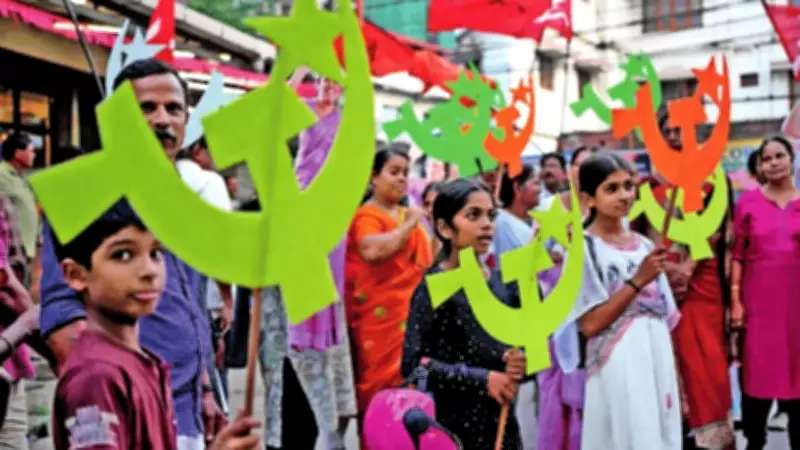
The Communist Party of India (Marxist) faced a significant rout in Kerala, marking the culmination of a decay that had long infiltrated the party's functional apparatus. The endemic rot spread with alarming speed after the CPM secured a repeat mandate in 2021, a victory ironically facilitated by the COVID-19 pandemic.
Endemic Indignation
Every incumbent government is bound to generate some resentment. The first Pinarayi Vijayan administration would have been no exception, but the pandemic-induced political climate suppressed any indignation from the electorate. The jubilant CPM's return to power for a second term fostered a sense of entitlement among party functionaries, legislators, and ministers, leaving even left sympathizers and party workers bitter.
A Rookie Cabinet
A group of novice ministers did not help the party's image as pro-poor. Except for three ministers, including the chief minister, all others held ministerial posts for the first time. This inexperience resulted in fragile decision-making. The bureaucracy, increasingly detached from common citizens' aspirations, widened its influence. The chief minister, embroiled in numerous battles across different domains, could not devote time to guide his inexperienced colleagues constitutionally.

The Parasite Ecosystem
Alongside the bureaucracy, a parasitic ecosystem of media propagandists crept into the corridors of power. They were perceived as beneficiaries of the administration's largesse, as conclaves and mega-events became the face of the ruling dispensation. These embedded public relations agents flooded social media with laudatory commentary.
The emboldened political administration did not hesitate to flaunt its power with spectacular mega-shows, including the Loka Kerala Sabha. The ministerial entourage that visited all 140 electoral constituencies as preparation for the 2024 Parliament elections caused more harm. This tour de force turned into a debacle, alienating common citizens who watched warily from the sidelines.
Perception Management Debacle
Towards the end of the assembly's tenure, the government attempted to capitalize on perceived goodwill through a series of public relations gimmicks. However, the perception of the propaganda machinery within the administration and that of the public were vastly different. A politically charged electorate was unwilling to listen to whimsical chats between a film personality and the state's top functionary. The effort to spruce up the government's image like a reel story fell flat.
A Spineless Apparatus
The CPM's political backbone had long been idle, with power concentrated in the secretariat. The party-government coordination that had reigned supreme during all Left Democratic Front (LDF) regimes was buried unceremoniously. With the demise of this course-correction mechanism, a destructive churn spread through the party apparatus. Discussion in party forums was systematically erased, causing deep resentment among even loyal cadres. Political approaches faltered due to the lack of a functional organization.
Faltering Course Correction
The CPM interpreted its Lok Sabha defeat as the result of losing support from a section of the majority community that traditionally backed it. Some party leaders attempted a subtle course correction by using inflammatory language targeting perceived rivals of the majority, but this did not resonate with the public. Instead, it drove minority communities en masse toward the United Democratic Front (UDF), alienating an influential electoral constituency.
Mandrake's Wand
The chief minister's patronizing approach to a backward community leader known as 'Junior Mandrake' acted as a magic wand in galvanizing anti-government forces. Nepotism in candidate selection prompted even sympathizers to turn against the party. The rout was inevitable.






