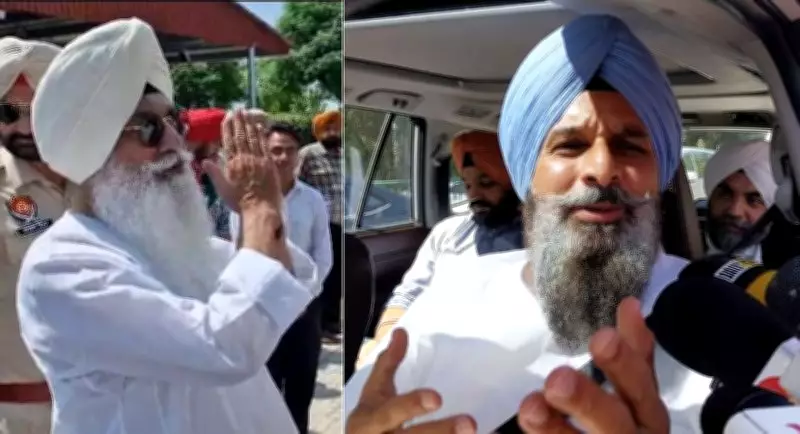
A recent development in Punjab has once again brought the complex relationship between faith and politics into sharp focus, stirring public discourse across the state. The catalyst for this renewed debate is a statement issued by Dera Beas, a prominent spiritual organization, concerning former minister Bikram Singh Majithia. This incident underscores the persistent and often contentious interplay between religious institutions and political figures in the region.
The Statement That Sparked Controversy
Dera Beas, known for its significant following and influence in Punjab, released a statement that directly referenced Bikram Singh Majithia, a well-known political figure from the state. Majithia, who has served as a minister and is a senior leader in the Shiromani Akali Dal, has been a central figure in Punjab politics for years. The content of the Dera's statement, while not explicitly detailed in public reports, has been interpreted by many as having political undertones, leading to widespread speculation and analysis.
This move by Dera Beas is not an isolated event but part of a broader pattern where religious deras and other spiritual groups in Punjab occasionally weigh in on political matters. Such interventions often resonate deeply with the public, given the state's rich cultural and religious heritage, where faith plays a crucial role in daily life and community dynamics.

Historical Context of Faith and Politics in Punjab
To fully understand the implications of this statement, it is essential to consider the historical backdrop of faith-based politics in Punjab. The state has a long history where religious leaders and institutions have wielded considerable influence over political outcomes. From the era of the Sikh Gurus to modern-day deras, spiritual guidance has frequently intersected with governance and electoral strategies.
In recent decades, deras like Dera Beas have emerged as powerful entities, commanding loyalty from millions of followers. Their statements can sway public opinion, mobilize voters, and even impact election results. This dynamic creates a delicate balance, where political parties often seek endorsements from such groups while also navigating the risks of being perceived as overly reliant on religious endorsements.
Reactions and Ramifications
The statement from Dera Beas has elicited varied responses from different quarters of Punjab's political landscape. Supporters of Bikram Singh Majithia and the Shiromani Akali Dal have viewed it as a validation of his standing, potentially boosting his political clout. Conversely, critics and opposition parties have raised concerns about the blurring of lines between spirituality and partisan politics, arguing that such interventions could undermine secular principles.
Public reaction has been equally mixed, with debates unfolding on social media, in local gatherings, and among political analysts. Many citizens are questioning the appropriateness of religious organizations making statements that could be seen as endorsing or criticizing political figures. This has led to broader discussions about the role of faith in a democratic society and how it should interact with political processes.
Broader Implications for Punjab's Political Future
This incident highlights ongoing tensions that are likely to persist as Punjab approaches future elections and political milestones. The involvement of deras in political discourse raises important questions about transparency, accountability, and the influence of non-state actors in governance. It also reflects the evolving nature of Punjab's identity, where traditional religious values coexist with modern political aspirations.
Moving forward, political parties may need to reassess their strategies regarding engagements with religious groups. Ensuring that such interactions do not compromise democratic norms or alienate segments of the electorate will be crucial. Additionally, this debate could prompt calls for clearer guidelines or ethical standards regarding the involvement of spiritual organizations in political matters.

In conclusion, the Dera Beas statement on Bikram Singh Majithia has reignited a vital conversation about faith and politics in Punjab. By examining this event in the context of historical trends and current reactions, it becomes clear that the intersection of spirituality and governance remains a pivotal and often controversial aspect of the state's socio-political fabric. As Punjab continues to navigate these complexities, such debates will likely shape its political trajectory for years to come.