

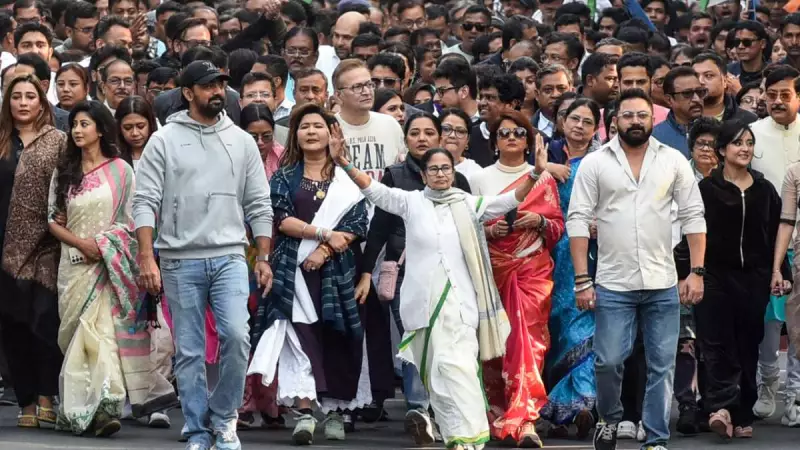
The political landscape of West Bengal was thrown into turmoil on Wednesday as the Enforcement Directorate (ED) conducted searches at multiple offices linked to the political consultancy firm Indian Political Action Committee (I-PAC) in Kolkata. The raids, part of an ongoing money laundering investigation, triggered immediate and fierce protests from West Bengal Chief Minister and Trinamool Congress (TMC) supremo Mamata Banerjee, who accused the central agency of political vendetta.
Raids and Immediate Political Fallout
According to officials, the federal probe agency carried out searches at three locations associated with I-PAC in the city. The action is reportedly connected to a case where the ED is investigating alleged violations of foreign exchange laws. I-PAC, known for its strategic election management services, has previously worked with the TMC and several other political parties across India.
The raids prompted a swift and dramatic reaction from Chief Minister Mamata Banerjee. She arrived at one of the raided premises, condemning the action as a "blatant misuse of central agencies" to intimidate the political opposition. "This is not a raid, it's a political drama to harass us," Banerjee stated while speaking to the media gathered outside. Her presence galvanized TMC workers, leading to protests and a significant gathering at the site, with party leaders alleging targeted harassment by the Bharatiya Janata Party (BJP)-led central government.

ED Alleges Interference, Approaches Chief Justice
In a remarkable escalation, the Enforcement Directorate later in the day filed an application before the Chief Justice of India, D.Y. Chandrachud. The agency alleged that the protest led by the Chief Minister and the gathering of her supporters amounted to obstruction and interference in the due process of law. The ED's plea sought the Supreme Court's intervention to ensure that its officials could perform their duties without any political pressure or hindrance.
This move underscores the deepening conflict between central investigative agencies and opposition-ruled states. The ED's application highlighted the challenges faced by its officers during the searches, claiming that the political demonstration was designed to intimidate and stall the investigation. Legal experts note that approaching the country's top judge directly is an unusual step, reflecting the severity of the standoff.
Broader Implications and Reactions
The incident has ignited a fresh political firestorm, with accusations flying from all sides. The BJP defended the ED's actions, stating that the agency was merely doing its job and that no one is above the law. "If you have done nothing wrong, why are you afraid of an investigation?" questioned a state BJP leader. Conversely, opposition parties, including the Congress, rallied behind the TMC, framing the event as part of a larger pattern of using agencies like the ED to settle political scores.
I-PAC, at the center of the storm, issued a statement asserting its commitment to full compliance with the law. The firm said it was providing all necessary documents and cooperation to the investigating officials. The fallout from this event is likely to resonate beyond Kolkata, influencing the political discourse ahead of future elections and raising critical questions about the autonomy of federal agencies and the limits of political protest.
As the legal and political battles unfold, all eyes are now on the Supreme Court's response to the ED's plea. The outcome could set a significant precedent regarding the conduct of investigations in politically charged environments and the boundaries between legitimate protest and obstruction of justice.






