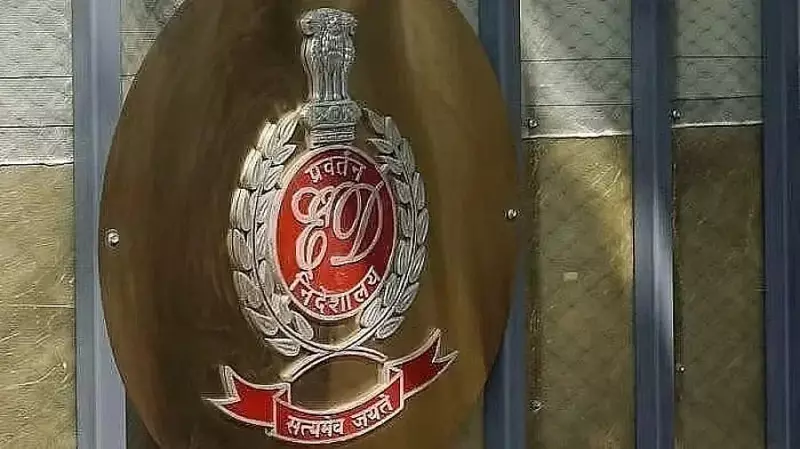
The political landscape of West Bengal is once again under a microscope following a series of Enforcement Directorate (ED) raids, a move widely seen as the Narendra Modi government's latest gambit. However, political analysts warn that this strategy of deploying federal investigative agencies may prove to be a significant miscalculation for the Bharatiya Janata Party (BJP) in the state.
A Familiar Pattern of Federal Action
The raids, conducted by the ED, represent a continuation of the central government's approach of using its agencies in states governed by political opponents. The timing and targets of these actions are invariably viewed through a political lens, raising questions about their intent. In West Bengal, a state with a fiercely independent political culture and a ruling Trinamool Congress (TMC) known for its defiance, this tactic encounters unique resistance.
Observers note that the Narendra Modi government's gambit is not new, but its application in Bengal carries distinct risks. The state's electorate has historically been sensitive to perceptions of external imposition, and the current administration, led by Chief Minister Mamata Banerjee, has built a reputation on standing up to the Centre.

Risk of a Political Backfire
The core question emerging from these developments is: who truly benefits when federal might clashes with state defiance? While the immediate goal may be to uncover alleged financial irregularities and apply pressure on the TMC, the long-term political consequences could be counterproductive for the BJP.
Such actions often allow regional leaders to frame themselves as victims of political vendetta, galvanizing their support base. In Bengal, this narrative can strengthen the TMC's position by portraying it as the sole bulwark protecting the state's interests and autonomy from an overreaching central government. This dynamic may inadvertently consolidate anti-BJP votes rather than erode the ruling party's standing in the state.
Misreading the Regional Sentiment
The criticism, as highlighted by commentators like Sayantan Ghosh, suggests the BJP may have yet again misread the complex West Bengal political landscape. The state's politics are deeply rooted in identity and regional pride. A heavy-handed approach from New Delhi can trigger a backlash, reinforcing the "us versus them" narrative that often benefits regional parties.
The ED raids, while a tool of legal and financial scrutiny, are thus transformed into a potent symbol of political conflict. The outcome may not be the weakening of the TMC but a further entrenchment of political battle lines, making the BJP's quest for expansion in the state even more challenging.
In conclusion, while the enforcement actions continue to make headlines, their ultimate political efficacy remains doubtful. The clash between federal agencies and state defiance in West Bengal appears to be a high-stakes game where the political benefits are unclear, and the potential for a strategic setback for the central ruling party is very real. The events underscore the delicate balance between lawful investigation and political perception in India's vibrant federal democracy.