

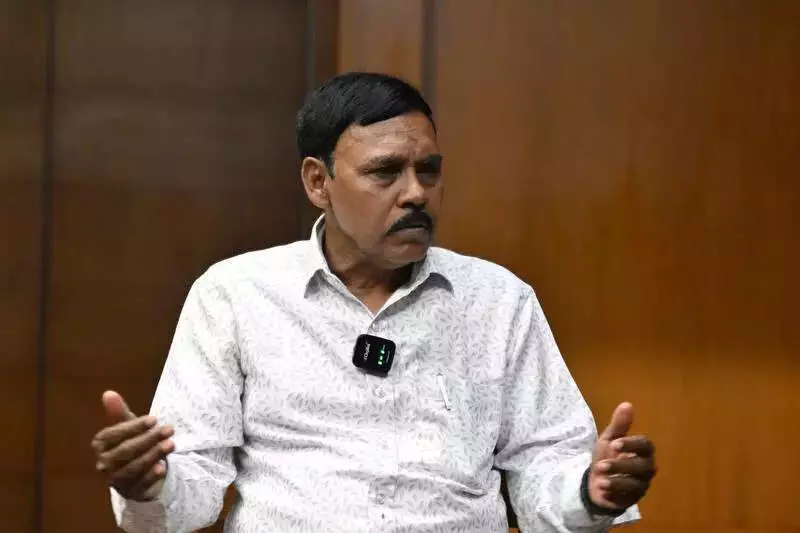
In a candid revelation, surrendered senior Maoist leader Chandranna has provided a detailed autopsy of the left-wing extremist movement's decline in India, arguing it did not collapse overnight but withered due to a combination of relentless state pressure, internal decay, and a failure to comprehend rapid social changes.
Sustained State Pressure and Military Squeeze
Chandranna pinpointed sustained military pressure as the first major factor in the Maoist decline. He explained that both central and state forces maintained relentless pressure through an expanded network of CRPF camps and sustained combing operations by elite units like the Greyhounds of Telangana and Andhra Pradesh. This steadily shrank the operational space for the party.
He traced the escalation to the period when the former Manmohan Singh government declared the Maoist movement a major internal security threat. "Repression began after that declaration," Chandranna said, noting it intensified and "reached a new height during Operation Kagar." However, he stressed the decline was not just about armed losses. The sustained operations dismantled the organisation's core abilities to communicate, coordinate, and function as a cohesive force.

Internal Decay and Years of Isolation
The second critical factor, according to Chandranna, was internal erosion. He described a prolonged phase, spanning the past four to five years, where CRPF saturation and continuous combing virtually severed communication between leadership units. Committees were forced to function in isolation, making decisions without central guidance.
This breakdown in structure led to unilateral actions. Chandranna revealed that while internal discussions on retreat and possible talks were underway, some leaders independently issued letters before any collective decision was finalized—a move he called "inappropriate." For him, these actions reflected a deeper organisational decay where individuality and petty bourgeois tendencies replaced the iron discipline the movement once prided itself on.
Failure to Adapt to a Changing Society
The third pillar of the decline was the party's failure to read and adapt to sweeping social and political changes. Chandranna said discussions on the need to adapt began as early as 2003 but never translated into concrete action. Economic liberalisation reshaped aspirations and social behaviour, making the austere revolutionary lifestyle increasingly unsustainable for cadres.
"Everyone agreed the situation had changed and that the party was facing an internal crisis," he stated. However, instead of triggering thorough collective debate, these pressing issues often led to hurried, poorly conceived decisions.
Chandranna defended the merger of the People's War and the Maoist Communist Centre as a strategic move that expanded the organisation's footprint beyond South India. He rejected claims that it weakened the movement, insisting all major decisions followed collective political direction and were not driven by individual leaders.
Chandranna's Personal Journey and Rise
Recounting his own trajectory, Chandranna said revolutionary ideology was strong in schools and colleges during his student days in the 1980s. He began with wall posters and slogan-writing, drawn into radical politics through the Revolutionary Students Union, inspired by organiser Daggu Rajalingam. "I was influenced by the belief that Naxals were working for the poor," he said.
He joined the underground movement around 1980, starting as a courier in Karimnagar district, and entered an armed group in Adilabad in 1981. He recalled an early setback when commander Gajjala Gangaram died in an explosive accident during training at the Mahadevpur camp.
Chandranna rose to become a commander in 1983, joined the North Telangana Special Zonal Committee in the mid-1990s, and was elevated to the Central Committee in 2008. He attributes his rise to his ideological grounding, organisational skills, and work in building frontal organisations.

His analysis presents a comprehensive view from within, concluding that the Maoist movement was squeezed from the outside by the state but ultimately eroded from within, unable to keep pace with the society it sought to revolutionise.





