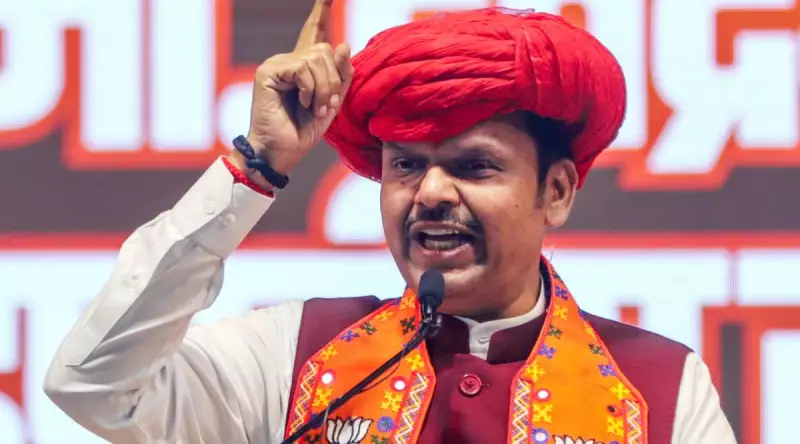
Maharashtra's political landscape has been jolted by a significant internal rift within the ruling Mahayuti alliance. Deputy Chief Minister Devendra Fadnavis has openly expressed his displeasure and called for an immediate end to the Bharatiya Janata Party's (BJP) local electoral alliance with the Congress party in Ambernath. This unexpected demand has sent shockwaves through the coalition and raised serious questions about its unity.
The Core of the Controversy: An Unlikely Alliance
The controversy centers on the political dynamics within the Ambernath Municipal Corporation. In a surprising move, the local BJP unit entered into an alliance with the Congress to gain control of the civic body. This partnership was forged to counter the influence of the Shiv Sena (UBT) and potentially other rivals. However, this tactical local agreement has now become a major point of contention at the state's highest political level.
Deputy CM Devendra Fadnavis is reportedly "miffed" and deeply unhappy with this arrangement. He views an alliance with the Congress, the BJP's principal national opponent, as ideologically contradictory and politically damaging. His firm stance is that such partnerships undermine the party's core principles and confuse its voter base. Fadnavis has, therefore, pushed for the dissolution of this local tie-up, insisting the BJP should contest independently or with its natural allies in the Mahayuti.

Shinde Sena Raises Pointed Questions
The demand from the senior BJP leader has not been met with silent agreement from all alliance partners. The Shiv Sena faction led by Chief Minister Eknath Shinde has raised pointed questions regarding the situation. Their concern stems from the broader implications of such local alliances on the stability and trust within the ruling Mahayuti coalition at the state level.
If the BJP can ally with the Congress in Ambernath, it sets a precedent that could complicate relationships elsewhere. The Shinde Sena's questioning highlights the underlying tension and the challenge of managing a multi-party coalition where local interests sometimes clash with state-level alliances and national political narratives. This incident exposes the fragile nature of the political understanding between the BJP and the Shinde-led Sena.
Potential Fallout and Political Ramifications
This internal conflict has several immediate and potential long-term consequences for Maharashtra politics. Firstly, it creates an embarrassing public rift within the ruling alliance just months after its formation. The image of a unified front against the opposition Maha Vikas Aghadi (MVA) is now tarnished.
Secondly, the episode puts Chief Minister Eknath Shinde in a delicate position. He must balance the demands of his powerful deputy, Devendra Fadnavis, against the concerns of his own party members and the practical realities of local politics. How he navigates this dispute will be a test of his authority within the coalition.
Thirdly, the opposition parties, particularly the Shiv Sena (UBT) and the Congress, are likely to seize upon this discord. They will use it to accuse the Mahayuti of political opportunism and a lack of ideological commitment, arguing that the alliance is held together only by power-sharing and not by common goals.
Finally, the situation in Ambernath could become a template for future conflicts. As municipal elections approach in other cities, similar local political compulsions might arise, forcing state leaders to repeatedly intervene and potentially causing more friction. The resolution of this issue will set a precedent for how such dilemmas are handled within the coalition going forward.
In conclusion, what began as a local political strategy in Ambernath has escalated into a significant crisis for Maharashtra's ruling alliance. Devendra Fadnavis's strong objection to the BJP-Congress pact has exposed ideological fault lines and practical tensions within the Mahayuti. With the Shinde Sena seeking clarifications, the coalition's leadership must now find a way to resolve this dispute without further damaging their collective political standing. The outcome will be closely watched as an indicator of the alliance's long-term viability and discipline.