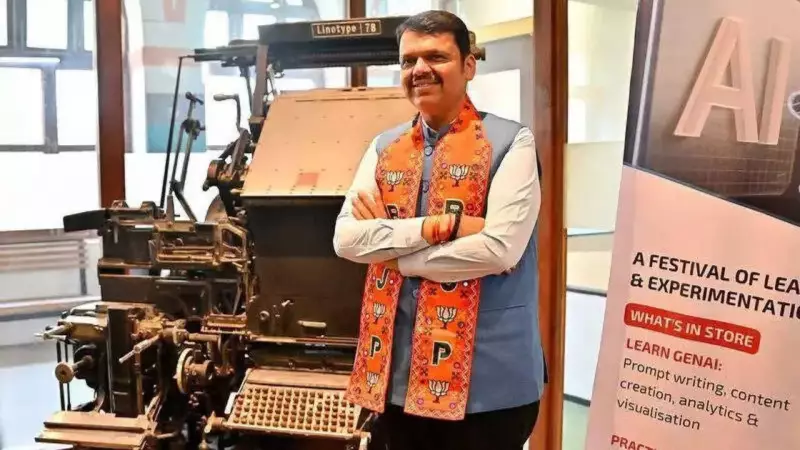
In an exclusive pre-election conversation, Maharashtra Chief Minister Devendra Fadnavis addressed a spectrum of pressing issues, from political alliances and civic governance to Mumbai's future development. The interaction shed light on the Bharatiya Janata Party's (BJP) strategy and vision for the state's capital.
On Mumbai Roots and Political Alliances
Responding to criticism about his right to speak on Mumbai, Fadnavis offered a sharp retort. He pointed out that iconic figures like the late Balasaheb Thackeray were not born in the city either, yet possessed an unparalleled understanding of it. "Mumbai may not be my janmabhoomi (birthplace), but it has been my karmabhoomi (workplace) since 1999," he asserted, defending his long-standing association with the metropolis.
Explaining the rationale behind the Mahayuti alliance with the Eknath Shinde-led Shiv Sena and the Ajit Pawar-led NCP, Fadnavis called it a "moral responsibility" and a pragmatic move. He stated that the legacy of Balasaheb Thackeray now rests with Shinde, making a contest between them improper. He framed the alliance as a "win-win situation" that consolidates vote banks. On seat-sharing, he cited examples of compromise in Kalyan-Dombivli and Jalgaon.

When questioned about granting the mayor's post to Shiv Sena, Fadnavis responded, "Why 2.5 years? We can give it to them for five years also. The mayor will be of the Mahayuti." He emphatically stated that the alliance is solid and will continue until the 2029 assembly elections and beyond.
Addressing Internal Dissent and Roadmap for Mumbai
The Chief Minister acknowledged discontent among women party workers over ticket distribution, attributing it to a larger pool of aspirants for a constant number of seats. He noted that while there is 50% reservation for women, the party has allocated 55% of seats to women candidates.
Outlining his vision for Mumbai, Fadnavis highlighted the Development Control and Promotion Regulations (DCPR) 2034. A key technological intervention is in the works for the Brihanmumbai Municipal Corporation (BMC). A new AI-powered platform is being developed to scrutinize building proposals, flag violations, and generate 3D models, aiming to eliminate human subjectivity and corruption in the approval process.
To improve the quality of life, he emphasized massive infrastructure projects, including over 400 km of metro network, improved suburban rail services with state funding, and the Worli-Sewri connector slated for December 2026 completion. He also mentioned initiatives to treat sewage before it enters the sea.
Dharavi Redevelopment and Bureaucratic Challenges
On the contentious Dharavi redevelopment, Fadnavis clarified that all eligible residents would be rehabilitated within Dharavi itself. For ineligible persons, the government plans to provide 12 years of rental housing in various locations, including a reclaimed dumping yard in Deonar, following a bio-mining and capping process similar to one used in Nagpur. He labeled the earlier Mahul rehab project a "scam."
Fadnavis admitted that reforming the lower-level bureaucracy in the BMC remains a significant challenge, as officials often perceive political leadership as temporary. Efforts are underway to enable inter-corporation staff transfers to bring in fresh accountability.
The Chief Minister also addressed and condemned local-level alliances with Congress and AIMIM in places like Ambernath and Akot, calling them mistakes and stating that disciplinary action had been taken.