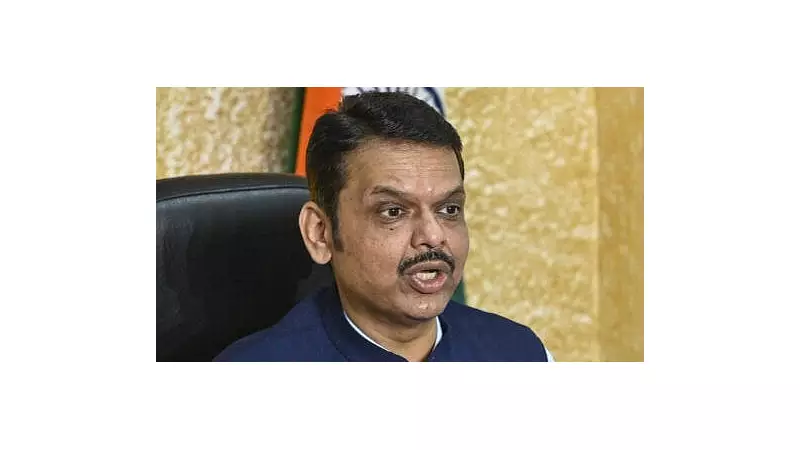
In a candid revelation, Maharashtra Deputy Chief Minister Devendra Fadnavis has indicated that a pre-agreed "friendly fight" between the Bharatiya Janata Party (BJP) and the Nationalist Congress Party (NCP) led by Ajit Pawar for the upcoming civic elections in Pune is showing signs of strain. Fadnavis suggested that the restraint promised by the NCP leader appears to be weakening.
The Genesis of the 'Friendly Fight' Agreement
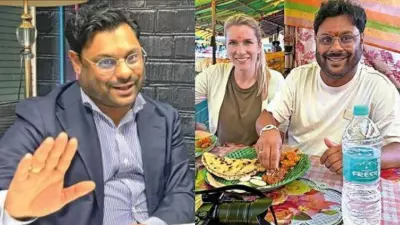
Speaking during an interactive session with actor Girija Oak, Fadnavis detailed the background of the political understanding. He explained that the BJP and the NCP, which are allies in the state government, had decided well in advance not to contest the crucial Pune and Pimpri-Chinchwad municipal corporation elections as a formal alliance. The rationale behind this decision was the significant strength both parties independently command in the region.
The mutual understanding was to engage in a 'friendly fight', where both sides would compete without resorting to aggressive or hostile campaigning against each other. This arrangement was seen as a pragmatic solution to accommodate the political ambitions of both allies while maintaining their coalition at the state level.
Signs of Strain in the Political Pact
However, Fadnavis's recent comments hint at a potential breakdown of this gentleman's agreement. "We agreed on friendly fights, but Ajit Pawar’s restraint appears shaken," Fadnavis stated, pointing towards a shift in the NCP's approach as electioneering intensifies.
This public airing of concerns underscores the underlying tensions within the ruling 'Mahayuti' alliance in Maharashtra. The Pune and Pimpri-Chinchwad civic polls are high-stakes battles, controlling vast municipal budgets and significant political influence in the state's cultural and economic heartland. The apparent fraying of the pre-poll pact suggests that local-level political compulsions are testing the cohesion of the state-level partnership.
Implications for Maharashtra's Political Landscape
The development has several immediate consequences. Firstly, it sets the stage for a more intense and direct triangular contest in the urban civic bodies, potentially involving the Shiv Sena (UBT) and Congress as well. Secondly, it exposes the challenges of managing an alliance where constituent parties have overlapping areas of influence.
The remarks made on January 11, 2026, by the senior BJP leader serve as both an observation and a subtle warning to its ally. By voicing this in a public forum, Fadnavis has brought the internal disagreement into the open, which could be a tactical move to apply pressure on the NCP faction to adhere to the original understanding.
As the campaign for the civic elections gains momentum, all eyes will be on how the BJP and the Ajit Pawar-led NCP navigate this delicate situation. The outcome will not only determine the control of key urban local bodies but also signal the future stability and operational dynamics of the ruling coalition in Maharashtra.