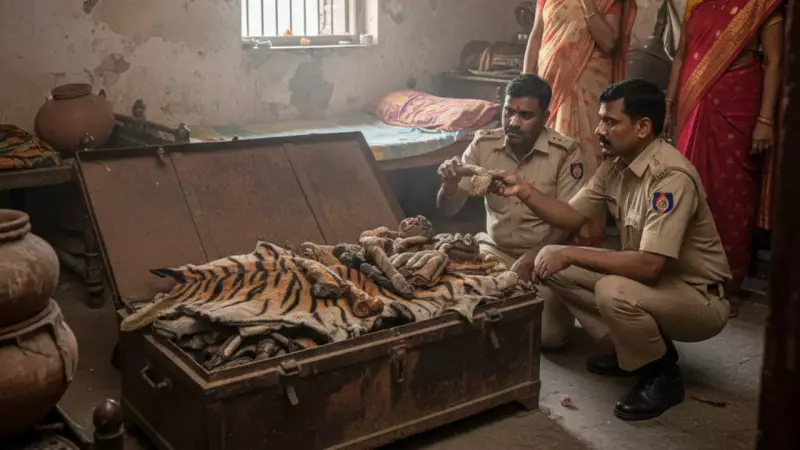
A startling discovery in a small temple room in Gujarat's Narmada district initially sent shockwaves through the local forest department, raising alarms about potential large-scale wildlife crime. The incident unfolded in Rajpipla town after the recent death of a long-term temple caretaker.
Mysterious Discovery in a Secluded Room
Forest department staff were called to the temple premises after temple management made an unexpected find. The room, which had been occupied until two weeks ago by a 90-year-old caretaker named Madhavanand, was slated for demolition to make way for a new building. Inside, officials uncovered what appeared to be a significant cache of wildlife contraband.
The haul included 37 tiger skins and 133 claws, all packed carefully inside an iron box. The initial sight of the items caused considerable concern, leading officials to suspect a major poaching racket. A forest official explained that the late caretaker had never permitted anyone to enter his private room, keeping its contents a secret for years.

Fake Items Raise More Questions
However, the narrative took a curious turn upon closer inspection. Preliminary tests conducted by the forest department indicated that the skins and claws were not genuine tiger parts. Principal Chief Conservator of Forests (Wildlife) Jaipal Singh stated that the department is taking no chances and has sent samples for expert analysis.
Narmada's Deputy Conservator of Forests, Abhay Singh, provided an update, saying, "Our tests revealed on Thursday that the skins were not real. However, we have sent samples to the Centre for Cellular and Molecular Biology in Hyderabad for further, conclusive tests." The items are believed to have been painted skillfully to mimic the appearance of real tiger skins and claws.
Investigation and Lingering Suspicions
The origin and purpose of these high-quality fake animal parts remain a mystery. Investigators are probing why the caretaker, who was originally from Madhya Pradesh, possessed such a large collection. His background has inevitably raised suspicions about a possible past connection to poaching activities, even if the current items are replicas.
The forest department's investigation is ongoing, focusing on determining where the fakes came from and why they were stored in the temple room. The case highlights the vigilance of authorities and the complex nature of wildlife-related investigations, where appearances can be deceiving.