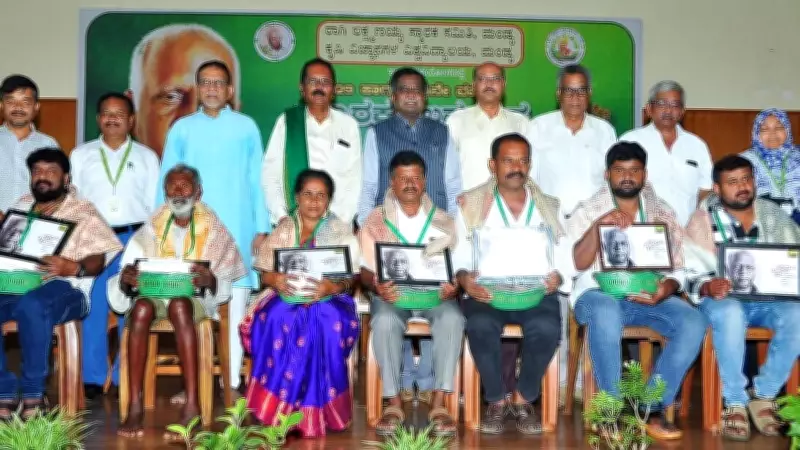
Farmers were honored during the Ragi Lakshmanaiah memorial lecture event held in Mandya. The event celebrated the contributions of farmers and highlighted the legacy of Ragi Lakshmanaiah, a pioneering agricultural scientist known for developing the high-yielding 'Indaf' variety of ragi (finger millet).
Development of the Indaf Variety
Ragi production in the region saw a significant peak after Lakshmanaiah successfully developed the Indaf variety in 1964. This was achieved by cross-breeding a local variety of ragi with a variety brought from Africa. The new variety was resistant to pests and diseases, and it produced higher yields, which greatly benefited farmers in Karnataka and other parts of India.
Memorial Lecture Event
The memorial lecture event in Mandya brought together farmers, agricultural experts, and officials to discuss the importance of ragi cultivation and the impact of Lakshmanaiah's work. Farmers were felicitated for their role in adopting improved farming practices and contributing to food security. The event also featured talks on sustainable agriculture and the future of millet farming in the context of climate change.

The Ragi Lakshmanaiah memorial lecture serves as an annual reminder of the scientist's contributions and the need to support farmers who continue to cultivate this nutritious grain. Ragi, being a climate-resilient crop, holds promise for ensuring food security in the face of changing weather patterns.