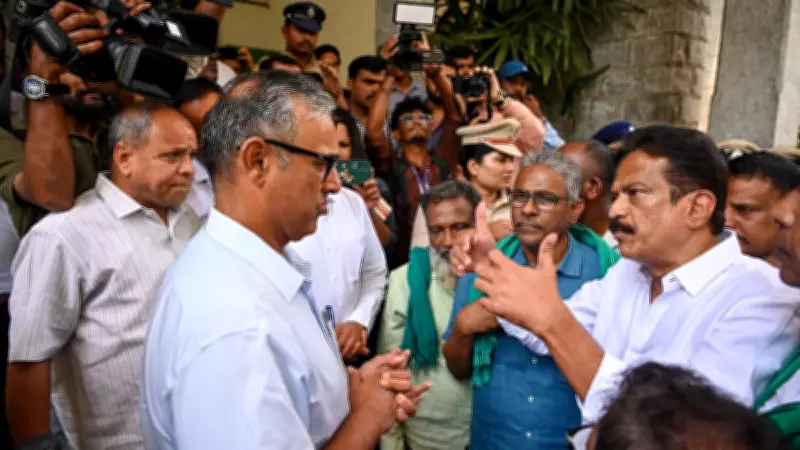
Farmers in Bengaluru staged a protest on Wednesday against the introduction of paid parking at KR Market, one of the city's largest wholesale markets. The demonstration, organized by the Karnataka Rajya Raitha Sangha, saw dozens of farmers gather at the market entrance, demanding the immediate withdrawal of the parking fee.
Protest and Demands
The farmers argued that the new paid parking system imposed an additional financial burden on them, as many travel long distances to sell their produce. They claimed that the fee, which ranges from Rs 20 for two-wheelers to Rs 50 for larger vehicles, eats into their already thin profit margins. The protesters also highlighted the lack of adequate parking infrastructure and alternative arrangements.
Government Assurance
Bruhat Bengaluru Mahanagara Palike (BBMP) commissioner G Jagadeesha met the protesting farmers and listened to their grievances. He assured them that the paid parking system would be reviewed and that necessary relief would be provided. Jagadeesha requested the farmers to withdraw the protest, promising that their concerns would be addressed within a week.

The commissioner also instructed market officials to explore alternatives, such as designated free parking zones for farmers and improved traffic management around KR Market. He emphasized that the BBMP aims to balance revenue generation with the needs of stakeholders.
Background
KR Market, a major hub for fresh produce, handles thousands of vehicles daily. The paid parking system was introduced earlier this month as part of the BBMP's efforts to regulate parking and generate revenue. However, farmers and traders have criticized the move, calling it ill-timed and detrimental to their livelihoods.
The protest was called off after the commissioner's assurance, but the issue remains unresolved. Farmers have warned of further agitation if the parking fee is not scrapped within the stipulated timeframe.
This incident highlights the ongoing tensions between civic authorities and vendors in Bengaluru's traditional markets, where modernization efforts often clash with the needs of small-scale traders and farmers.