

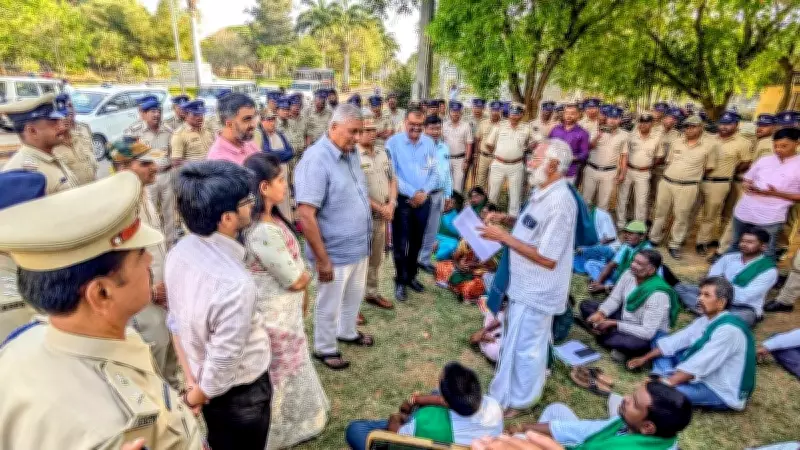
Farmers Issue Ultimatum: Indefinite Hunger Strike Looms Over Wildlife Safari
Farmers in Karnataka have issued a stern warning to the state government, threatening to launch an indefinite hunger strike if authorities do not immediately suspend the wildlife safari operations at the Bandipur Tiger Reserve. This dramatic escalation comes amid growing fears that resuming the safari will lead to increased incidents of wild animals straying into human settlements.
Safety Concerns Drive Protest Action
The core of the farmers' grievance revolves around the perceived threat to both livestock and human populations. A prominent farmers' leader articulated the community's fears, stating that reopening the safari would inevitably result in wild animals once again venturing into inhabited areas. This, they argue, poses a direct and unacceptable risk to the safety of people and their agricultural assets.
The protest highlights a critical conflict between conservation efforts and local livelihoods. While wildlife safaris are often promoted for eco-tourism and conservation awareness, residents in adjacent areas frequently bear the brunt of human-animal conflicts. Incidents of crop damage, livestock predation, and threats to human life have fueled longstanding tensions in regions bordering protected forests like Bandipur.

Bandipur Tiger Reserve at the Center of the Dispute
The Bandipur Tiger Reserve, a significant biodiversity hotspot in Karnataka, has been the focal point of this controversy. The reserve is a major tourist attraction, drawing visitors for its rich wildlife, including tigers, elephants, and various other species. However, its proximity to agricultural lands and villages has made it a flashpoint for disputes over land use and safety.
Farmers argue that the safari activities disturb animal habitats, prompting wildlife to seek food and space in neighboring human territories. This migration not only endangers lives but also causes substantial economic losses for farming communities dependent on livestock and crops.
Government Under Pressure to Respond
The ultimatum from the farmers places the Karnataka government in a difficult position. Authorities must balance the demands of:
- Conservation Goals: Protecting endangered species and promoting sustainable tourism.
- Public Safety: Ensuring the well-being of residents in forest-adjacent areas.
- Agricultural Interests: Supporting the livelihoods of farming communities.
Failure to address the farmers' concerns could lead to a prolonged agitation, with the hunger strike representing a severe form of non-violent protest. Such actions often draw significant media attention and public sympathy, increasing pressure on policymakers to find a swift resolution.
Broader Implications for Wildlife Management
This standoff underscores broader challenges in wildlife management across India. Similar conflicts have arisen in other states where protected areas border human habitations. Effective solutions require a multi-faceted approach, including:
- Enhanced compensation schemes for crop and livestock losses.
- Improved fencing and early warning systems to prevent animal intrusions.
- Community-based conservation programs that involve local residents in decision-making.
- Stricter regulation of safari timings and routes to minimize disturbances.
As the deadline for government action approaches, all eyes are on Karnataka's administration to mediate a solution that safeguards both wildlife and the welfare of its farming communities. The outcome could set a precedent for handling similar disputes nationwide, making this a critical issue for environmental and social policy.






