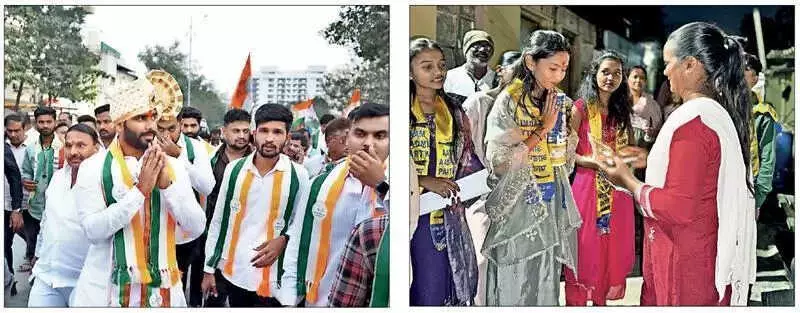
A quiet revolution is reshaping the political landscape of Pune and its suburbs. The familiar corridors of college campuses and crowded hostels are now the training grounds for a new wave of candidates, as Generation Z steps into the fray for crucial civic elections. These young contenders, balancing lecture notes with campaign trails, are not merely seeking votes; they are fundamentally challenging entrenched notions of who is fit to wield local power.
From Lecture Halls to Ward Halls: The New Faces of Representation
The transition from student life to political candidacy has been swift for many. Saee Thopte, 22, a final-year BBA student at Symbiosis College, found her life transformed overnight when the Bharatiya Janata Party (BJP) announced her candidacy from Ward No. 36 C for the Pune Municipal Corporation (PMC). "I was sitting in class when the call came," she recalls, highlighting the sudden shift. With a background in student activism with the Akhil Bharatiya Vidyarthi Parishad (ABVP), Saee believes her entry is about tangible representation. "Young people discuss problems every day; now we want the power to solve them," she asserts.
This sentiment is echoed across the city. In Ward No. 9, Jayesh Sanjay Murkute, 24, backed by Sharad Pawar's Nationalist Congress Party (Sharadchandra Pawar), has turned a routine contest into a closely watched battle. Campaigning in the rapidly developing Baner-Balewadi-Pashan belt, he focuses squarely on civic accountability. "This area grew faster than the system," Jayesh points out, arguing that his age is an advantage in a ward filled with young professionals who seek energy and honesty over old rhetoric.

The Independent Streak: Grassroots Campaigns Take Root
The wave of young leadership is even more pronounced in Pimpri Chinchwad. Here, Vaishnavi Waghmare, just 21, is contesting independently from Ward 8. A third-year computer science engineering student, she consciously avoids flashy social media campaigns, preferring direct, personal conversations with voters. "Corruption pushed me to step forward," Vaishnavi states, outlining a focused agenda on water quality and healthcare access. She highlights the critical issue of unsafe drinking water and the plight of poor families when hospitals refuse Ayushman Bharat cards.
Similarly, Payal Ransing, the Aam Aadmi Party's candidate from Ward No. 10 and a final-year BCom student living in a chawl, grounds her politics in shared experience. "I live the same life as my voters, so I know their problems inside out," she says, identifying drinking water access as her primary concern. Her campaign is built on the promise of tangible, relatable change.
Education Meets Empowerment: A Formula for Lasting Change
For many of these candidates, academic pursuits and political ambitions are intertwined. Gauri Narsinge, 23, contesting on a Congress ticket from Ward No. 3 (reserved for Scheduled Caste women), is the first in her family to enter politics while completing her MBA. "You can do social work without power, but power helps you create lasting change," she observes, noting that voters in her ward are ready to trust educated youngsters who listen.
Meenaz Inamdar, a Post Graduate Diploma in Management (Finance) student and BJP candidate from Ward No. 9, brings a similar promise of renewal. She says voters are explicitly demanding new leadership and results, not excuses. "I want my ward to feel like a smart city, with roads, water and basic dignity," Meenaz emphasizes.
Adding another dimension to this shift is independent candidate Arshin Inamdar from Wanowrie. A second-year engineering student, she returned from college to work in her community, focusing on girls' education. "If girls study, families progress and society moves forward with them," Arshin states, encapsulating the forward-looking vision driving this entire cohort.

The entry of these Generation Z candidates into Pune's civic elections marks a significant departure from traditional politics. They are leveraging their education, digital nativity, and grassroots connect to address hyper-local issues like water, infrastructure, and transparent governance. Their campaigns, run between study sessions and door-to-door outreach, signal a potential lasting change in how Indian cities are governed, prioritizing accountability and fresh perspectives over established political routines.