

The government of Goa is on the verge of finalizing a comprehensive new cooperative policy specifically designed for the state. A committee of experts, led by former South Goa MP Narendra Sawaikar, is drafting the document with a clear focus on empowering youth and revitalizing key economic sectors.
Key Sectors in the Spotlight
The policy will place a strong emphasis on several critical areas to drive growth and generate employment. The primary sectors identified for support include youth engagement, agriculture, pisciculture (fish farming), the taxi business, and education. This initiative comes as a direct response to the Union government's directive for all states to create their own cooperative policies following the launch of a national framework and the establishment of a dedicated cooperation department.
The committee, constituted by the state government, has been working diligently for the last two months to shape the policy. It has reviewed approximately 15 written suggestions along with several verbal inputs from the public to formulate its recommendations.

Addressing Youth Representation and Skill Development
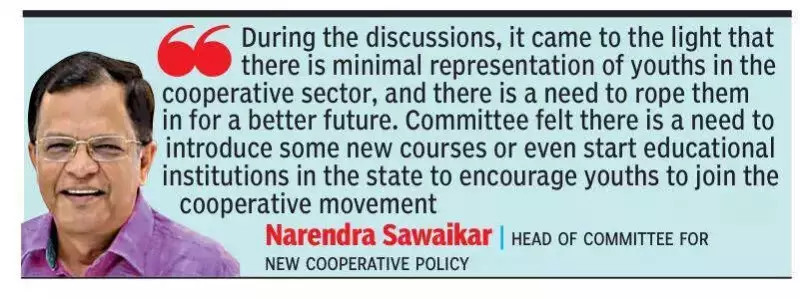
A significant finding during the committee's discussions was the minimal involvement of young people in the cooperative sector. Recognizing this gap, the policy aims to actively rope in the youth to ensure a sustainable future for the cooperative movement in Goa.
To achieve this, the committee sees a need for introducing new educational courses or even starting dedicated institutions. The goal is to encourage youth participation through proper skilling and awareness. Furthermore, the committee recommends establishing an institute within Goa to provide refresher courses for existing government staff and others, addressing the numerous challenges faced in these focus sectors.
Recommendations on Taxi Business and Broader Empowerment
In line with an announcement made by Chief Minister Pramod Sawant, the policy is likely to include specific recommendations for starting taxi businesses through cooperative societies. This move aims to organize and empower a significant segment of the state's service industry.
Beyond this, the committee's recommendations will encompass a wider range of areas crucial for holistic development. These include fisheries, women empowerment, and broader educational and skilling initiatives. The former MP confirmed that the committee plans to submit its final set of recommendations to the state government by the end of January 2024.
The formulation of this state-specific cooperative policy marks a strategic step by Goa to leverage the cooperative model for economic boost, job creation, and inclusive growth across its unique socio-economic landscape.






