

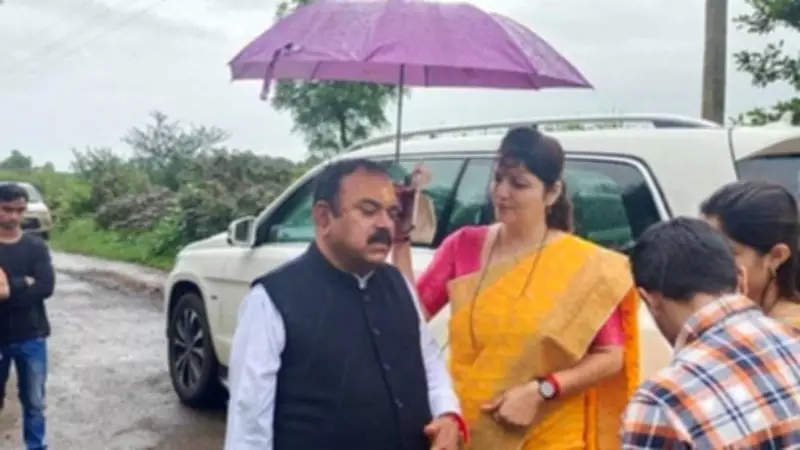
Self-Styled Godman Ashok Kharat's Lavish Lifestyle Exposed in Maharashtra
In a startling revelation from Maharashtra, Ashok Kharat, a self-proclaimed spiritual leader, has been found to be living a life of extraordinary opulence, raising serious concerns about the sources of his wealth and his activities. Investigations have uncovered that Kharat, who presents himself as a humble godman, possesses multiple high-value properties and luxury vehicles, starkly contrasting with the ascetic image he projects to his followers.
Details of the Lavish Lifestyle
Authorities and media reports indicate that Ashok Kharat has amassed significant assets, including several residential and commercial properties across Maharashtra. These holdings are estimated to be worth crores of rupees, suggesting a level of affluence that is highly unusual for someone claiming to lead a simple, spiritual life. Additionally, Kharat is reported to own a fleet of high-end cars, such as SUVs and sedans, which he uses for personal travel, further highlighting his extravagant lifestyle.
The investigation into Kharat's affairs has brought to light that he operates from a well-appointed ashram or center, where he conducts spiritual sessions and gathers devotees. This facility is said to be equipped with modern amenities and luxuries, contradicting the traditional, austere settings often associated with religious figures. Followers and local residents have expressed shock at these findings, as Kharat had previously been perceived as a modest spiritual guide dedicated to serving the community.

Questions Over Wealth Sources
The exposure of Ashok Kharat's king-size lifestyle has sparked widespread speculation and inquiry into how he accumulated such wealth. Key questions being raised include whether the funds came from donations by devotees, business ventures, or other undisclosed means. There are concerns that if the wealth is derived from followers' contributions, it might involve exploitation or misuse of trust, given the disparity between his public persona and private luxuries.
Legal experts and authorities are now scrutinizing Kharat's financial transactions and property records to determine if any laws have been violated. This includes checking for tax evasion, money laundering, or fraudulent activities. The case has drawn comparisons to other instances in India where self-styled godmen have been accused of amassing wealth through dubious methods, leading to public outrage and legal actions.
Impact on Followers and Public Perception
The revelation has had a profound impact on Ashok Kharat's followers, many of whom are now questioning their faith in him. Devotees who had looked up to him for spiritual guidance feel betrayed by the apparent hypocrisy, as they had believed in his teachings of simplicity and detachment from material possessions. This incident underscores the broader issue of trust in religious leaders and the need for greater transparency in spiritual organizations across India.
In response to the growing scrutiny, there have been calls for stricter regulations on self-proclaimed godmen and spiritual gurus to prevent such exploitation. Public awareness campaigns are being advocated to educate people about the potential risks of blindly following charismatic figures without verifying their backgrounds and intentions. The case of Ashok Kharat serves as a cautionary tale, highlighting the importance of due diligence in spiritual matters.
Ongoing Investigations and Future Implications
As investigations into Ashok Kharat's lifestyle and wealth continue, authorities are expected to delve deeper into his financial dealings and associations. The outcome could lead to legal proceedings if any wrongdoing is established, potentially resulting in charges related to fraud, tax evasion, or other offenses. This case may also prompt policy changes at the state or national level to better monitor and regulate individuals claiming spiritual authority.

The exposure of Kharat's lavish life has ignited a broader debate about the role of godmen in Indian society and the mechanisms needed to hold them accountable. It emphasizes the necessity for followers to remain vigilant and for authorities to enforce existing laws more rigorously to protect citizens from potential exploitation. The developments in Maharashtra are being closely watched, as they could set a precedent for handling similar cases in the future.





