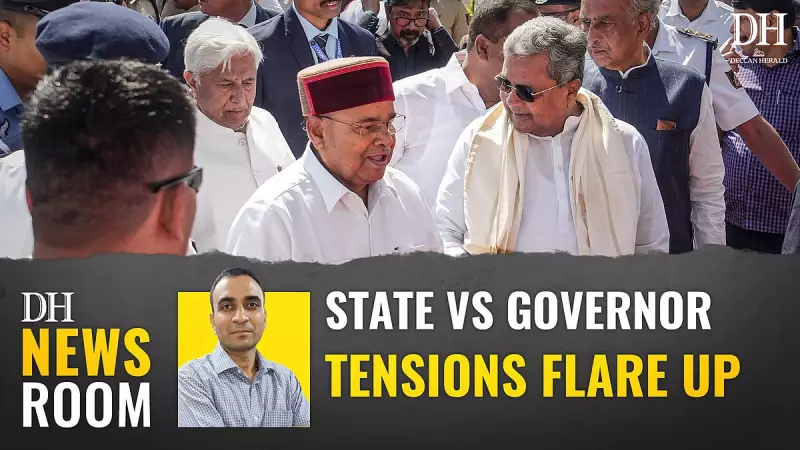
The Constitutional Standoff: Karnataka's Governor vs State Government Conflict
The political landscape of Karnataka has been gripped by a significant and ongoing tussle between the state's Governor and the elected government, raising critical questions about constitutional propriety and the balance of power in India's federal structure. This confrontation, which has escalated in recent months, centers on several key issues that have strained relations and created an atmosphere of uncertainty in the state's administration.
Roots of the Dispute: Key Points of Contention
At the heart of the conflict lie several specific disagreements that have fueled the tension between the Raj Bhavan and the Vidhana Soudha. The primary flashpoints include the Governor's delay in approving bills passed by the state legislature, which has led to accusations of overstepping constitutional boundaries. Additionally, there have been disputes over the appointment of university vice-chancellors and other key positions, where the Governor's role as Chancellor of state universities has clashed with the government's preferences.
Another major area of contention involves the Governor's discretionary powers regarding the summoning and prorogation of legislative sessions. The state government has expressed concerns that these powers are being used in a manner that undermines the elected administration's mandate. Furthermore, there have been disagreements over the Governor's communications with the central government regarding state matters, which the ruling party views as interference in Karnataka's autonomous functioning.

Constitutional Framework and Interpretations
The conflict brings to the forefront differing interpretations of the Indian Constitution's provisions regarding the roles of Governors in state governance. While the Constitution designates the Governor as the constitutional head of the state, it also emphasizes that the Governor should act on the aid and advice of the Council of Ministers in most matters. The current tussle highlights the gray areas in these provisions, particularly concerning bills sent for assent and appointments to key positions.
Legal experts have pointed out that the delay in granting assent to bills raises questions about the Governor's constitutional obligations. According to established conventions, Governors are expected to act promptly on bills passed by state legislatures, either granting assent, withholding assent (which is rare), or reserving the bill for the President's consideration. The prolonged withholding of assent without clear constitutional justification has become a central issue in the Karnataka conflict.
Political Dimensions and Federal Implications
Beyond the constitutional aspects, the tussle carries significant political implications. The conflict occurs against the backdrop of different political parties controlling the state government and the central government, which appoints the Governor. This has led to allegations that the Governor's actions are influenced by political considerations rather than constitutional principles alone.
The situation in Karnataka is not isolated but reflects broader tensions in India's federal structure. Similar conflicts have emerged in other states where Governors and elected governments have clashed over their respective roles and powers. These incidents have sparked debates about whether the institution of Governor needs reform to prevent such conflicts and ensure smoother functioning of state administrations.
Impact on Governance and Administration
The ongoing tussle has practical consequences for Karnataka's governance. Delayed bill approvals can stall important legislative initiatives, affecting policy implementation across various sectors. Uncertainty in administrative appointments creates instability in key institutions, particularly in the education sector where vice-chancellor positions remain vacant or contested.

Moreover, the constant friction between constitutional and elected authorities diverts attention and resources from pressing governance issues. Instead of focusing on development agendas and public welfare schemes, both sides remain engaged in legal and political battles, potentially affecting the state's progress and administrative efficiency.
Possible Resolutions and Future Outlook
Resolving the Karnataka impasse requires addressing both immediate concerns and long-term structural issues. Immediate solutions might involve clearer communication channels between the Governor's office and the state government, along with adherence to established constitutional conventions regarding bill assent and appointments. Some legal experts suggest that specific timeframes for gubernatorial decisions on bills could be codified to prevent indefinite delays.
Looking ahead, the Karnataka situation may prompt broader discussions about reforming the Governor's role in Indian federalism. Potential reforms could include more transparent criteria for gubernatorial appointments, clearer guidelines on the exercise of discretionary powers, and mechanisms for resolving disputes between Governors and state governments without resorting to prolonged confrontations that affect governance.
The tussle in Karnataka serves as a crucial case study in India's evolving federal democracy, highlighting the need for balanced interpretation of constitutional roles while respecting the mandate of elected governments. As the situation develops, it will likely influence similar conflicts in other states and potentially shape future constitutional interpretations regarding center-state relations in India's diverse political landscape.