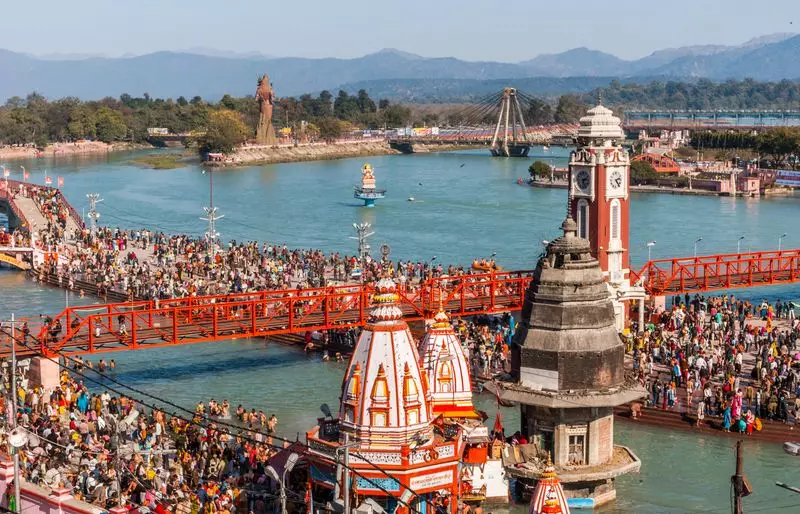
Boards Restricting Non-Hindus Appear at Uttarakhand's Har Ki Pauri
New boards have emerged at Har Ki Pauri in Uttarakhand. These signs explicitly bar non-Hindus from entering the sacred site. The development has sparked immediate controversy and debate across the region.
Details of the Controversial Signs
The boards are prominently displayed at the ghat. They state that only Hindus are permitted to access the area. This restriction applies to all non-Hindu individuals and groups.
Local authorities have confirmed the installation of these signs. However, they have not provided a clear explanation for the decision. The move appears to be a recent implementation.

Reactions from Various Groups
Religious leaders and community members have expressed mixed reactions. Some Hindu groups support the restriction, citing religious sanctity. They argue that Har Ki Pauri should remain exclusive to Hindu devotees.
Other voices strongly oppose the boards. They call the action discriminatory and against India's secular principles. Activists demand the immediate removal of the signs.
Historical and Cultural Context
Har Ki Pauri holds immense religious significance for Hindus. It is a major pilgrimage site in Haridwar. Millions visit the ghat annually for rituals and prayers.
Traditionally, the site has been open to people of all faiths. Tourists and pilgrims from diverse backgrounds have visited without restrictions. This new policy marks a significant shift.
Legal and Governance Implications
The boards raise important legal questions. Experts debate whether such restrictions violate constitutional rights. The issue touches on freedom of religion and access to public spaces.
Uttarakhand government officials are reviewing the situation. They have promised to examine the matter thoroughly. A formal statement is expected soon.
Impact on Tourism and Community Relations
Tourism stakeholders express concern over the boards. They fear the restrictions could deter visitors and harm the local economy. Haridwar relies heavily on pilgrimage and tourism revenue.
Community leaders urge dialogue to resolve the issue. They emphasize the need for harmony and inclusivity. The controversy continues to unfold as more people react.