

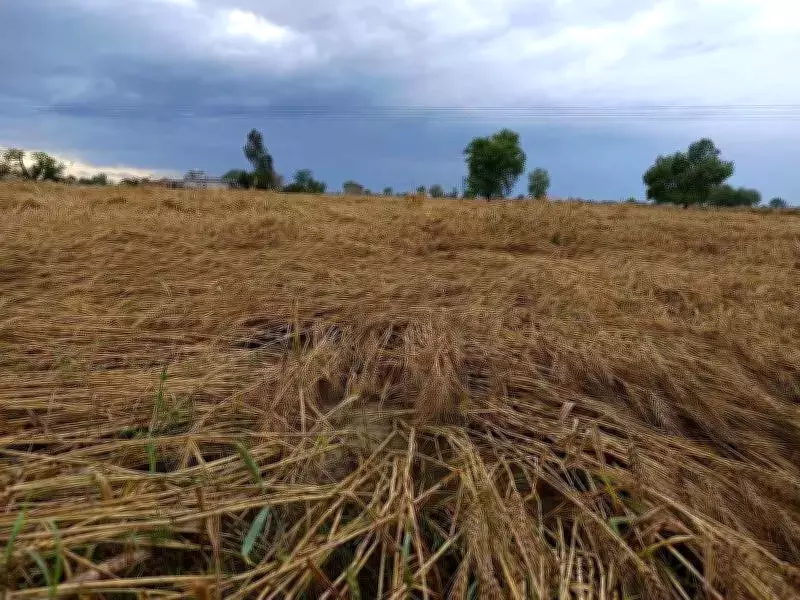
Heavy Rains and Winds Wreak Havoc on Crops in Punjab's Malwa Region
Another intense spell of rainfall has been reported across the Malwa region of Punjab, leading to substantial damage to agricultural crops in the districts of Bathinda, Mansa, and Barnala. The adverse weather conditions have raised concerns among local farmers and authorities alike.
Widespread Impact of Severe Weather
Heavy rain accompanied by gusty winds reaching speeds of 30 to 35 kilometers per hour was observed in numerous villages, including those in Malout and Gidderbaha. Specific areas such as Gurusar, Lodewal, and adjoining villages located along the Gidderbaha-Muktsar road also experienced significant rainfall and high-velocity winds. At certain locations, these strong winds exacerbated the situation, causing further distress to the agricultural community.
Government Response and Ministerial Visits
In response to reports of widespread crop damage in affected areas, Punjab ministers Gurmeet Singh Khudian and Baljit Kaur conducted visits to villages in the Lambi and Malout regions. These areas have been particularly impacted by the recent rain, hailstorm, and thunderstorm over the past two days. During their assessment, the ministers assured affected farmers of comprehensive support from the government to mitigate the losses incurred due to the weather-related damage.

Extensive Crop Damage Reported
The impact of the heavy rainfall extends beyond wheat crops, with vegetable farmers also facing severe consequences. A local resident highlighted the situation, stating, "Not only wheat crop, but even vegetables farmers faced the impact of rain, as green pumpkin, cauliflower, and capsicum faced damage with rainwater stagnating in the vegetable fields." This stagnation of rainwater has led to significant harm to various vegetable crops, compounding the challenges for agricultural producers in the region.
The ongoing weather disturbances underscore the vulnerability of Punjab's agricultural sector to climatic variations, prompting calls for enhanced preparedness and support mechanisms to safeguard farmers' livelihoods.






