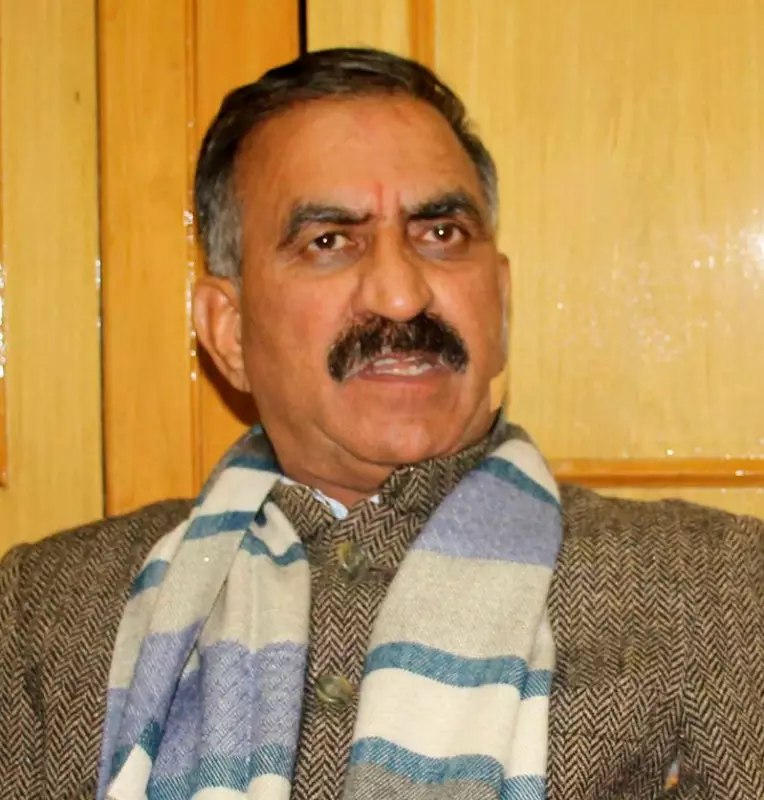
Himachal Pradesh Chief Minister Sukhvinder Singh Sukhu has launched a sharp critique against a recent High Court order concerning panchayat elections, labeling it as "arbitrary and devoid of legal interpretation." The state government is now preparing to challenge this decision in the Supreme Court.
Chief Minister's Strong Rebuttal to Judicial Directive
Sukhu expressed his strong disagreement with the Himachal Pradesh High Court's directive, which mandated the state election commission to promptly announce the schedule for panchayat polls. He argued that the court's decision was made without a proper legal foundation or detailed examination of the relevant constitutional provisions. The Chief Minister emphasized that his administration respects the judiciary but firmly believes this particular order overstepped its bounds by delving into the executive's domain.
"We have the highest regard for the judiciary," Sukhu stated, "but the High Court's order on panchayat elections is arbitrary. It was passed without any legal interpretation of the Constitution's relevant provisions." He clarified that while the government is committed to conducting the local body elections, the timing and process must follow the law and consider practical administrative preparations.
The Core of the Legal Dispute
The controversy stems from the High Court's order, which came in response to a public interest litigation (PIL). The court had instructed the State Election Commission to notify the election program for the panchayats without further delay. However, the state government contends that this directive ignores several critical legal and procedural aspects.
Sukhu pointed out that the order did not adequately consider the mandatory procedures outlined in the Himachal Pradesh Panchayati Raj Act, 1994. This includes the necessity of completing delimitation exercises, updating electoral rolls, and ensuring all reservations are correctly applied—processes that require time and meticulous administrative work. The government's stance is that conducting elections without completing these prerequisites would be legally unsound and could lead to future litigation.
Next Steps: An Appeal to the Apex Court
Given the fundamental disagreement with the High Court's rationale, the Sukhu-led Congress government has decided to take the matter to the highest judicial authority. The state will file a Special Leave Petition (SLP) in the Supreme Court of India, seeking a stay on the High Court's order and a fresh hearing on the merits of the case.
"We will present our case before the Honourable Supreme Court," the Chief Minister affirmed. He expressed confidence that the apex court would provide a more comprehensive interpretation of the constitutional framework governing local body elections. The government's legal team is preparing grounds that the High Court's intervention was premature and that the executive must be allowed to fulfill its statutory obligations before polls are announced.
Broader Implications for Panchayati Raj
This standoff highlights the ongoing tension between ensuring timely democratic decentralization and adhering to due legal process. Panchayats are the foundation of rural democracy in India, and their elections are crucial for grassroots governance. The Himachal Pradesh government asserts that it is not delaying elections unnecessarily but is instead ensuring they are conducted in a free, fair, and legally robust manner.
The outcome of the Supreme Court appeal will have significant implications not just for Himachal Pradesh but also for the interpretation of the powers of State Election Commissions and the scope of judicial intervention in election scheduling across the country. It sets a precedent for how courts interact with elected governments on matters of electoral administration under the Panchayati Raj system.
As the legal battle moves to Delhi, all eyes will be on the Supreme Court's ruling. The decision will determine whether the panchayat polls in Himachal Pradesh are held immediately under the High Court's timeline or after the state government completes what it deems essential preparatory work, potentially later in the year.