

Why Himachal's First Satellite Mountain Township Faces Strong Opposition
Himachal Pradesh's ambitious plan to build its first satellite mountain township in Jathiya Devi is meeting fierce resistance from local residents. People living in the area fear displacement from their ancestral homes and loss of their agricultural livelihoods.
Project Background and Current Status
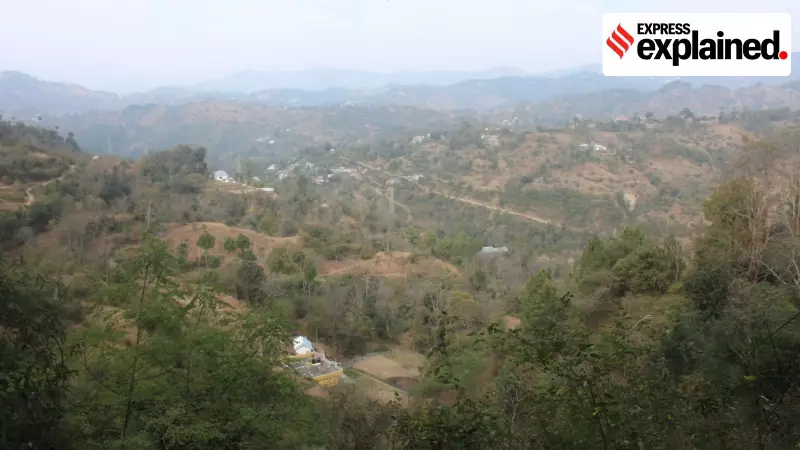
The Jathiya Devi township project was first conceptualized by the state government with central approval back in 2014. Located approximately 14 kilometers from Shimla city, this planned development aims to ease pressure on Shimla while creating new economic hubs and promoting sustainable urban growth.
After facing repeated delays due to funding constraints over the past decade, Phase I of the project is now being initiated using state resources. The Himachal Pradesh Housing and Urban Development Authority (HIMUDA) is executing the project, though central funding remains awaited.

The proposed township spans around 249 hectares, with only 35 hectares being government-owned land. The remaining land would need to be acquired from local residents across several villages.
Widespread Local Opposition
Residents across multiple villages have organized strong opposition to the land acquisition plans. On January 10, Gram Panchayat Bagi passed an unopposed resolution refusing to allow their land to be acquired for the township project.
"We were told that entire villages — including agricultural land and houses — would be acquired," said Neeraj Thakur, who opposed the project during a December 29 public hearing. "The government wants to build homes for newcomers by displacing people who have lived here for generations."
Naresh Kumar Thakur, pradhan of Gram Panchayat Bagi, explained that while only a quarter majority was needed to pass the resolution, it actually received signatures from 280 families out of 418 households. This demonstrates the widespread nature of the opposition.
Villages and Households Affected
The Social Impact Assessment (SIA) study conducted in November 2025 identified eight villages for potential land acquisition:
- Chanan (568 bighas)
- Panti (109 bighas)
- Aanji (396 bighas)
- Shilli Baghi (699 bighas)
- Majhola (78 bighas)
- Shilru (214 bighas)
- Dhanokari (270 bighas)
- Kyaragi (303 bighas)
Additionally, Manjiyari village in neighbouring Solan district has also been identified for acquisition. According to the SIA report, 386 households will be directly affected, with 158 households facing potential livelihood disruption.
Compensation Concerns and Livelihood Fears
Residents express deep concerns about compensation and the impact on their agricultural livelihoods. Many villagers have decided to boycott the acquisition process without even considering what compensation might be offered.
"My brothers and I own 12 bighas collectively," said 84-year-old Hira Singh Thakur. "After division among sons and grandsons, how much will each get? Agriculture is our livelihood. The government must clarify compensation before moving ahead."
Residents argue that the proposed acquisition threatens fertile agricultural land, ancestral homes, and centuries-old social and religious structures. They note that previous land acquisition by HIMUDA for the mountain township resulted in more than 250 bighas being taken over a long time ago, yet not a single brick has been laid on that land.
Government Response and Project Details
HIMUDA CEO and Secretary Surender Kumar Vashisht has sought to allay fears, stating that no land will be acquired forcibly. "We are not going to acquire any land against the wishes of locals," he said. "The December 29 hearing was only the first step in a long process."
Vashisht added that residential houses would be excluded from acquisition and that provisions exist for kitchen gardening and protection of livelihoods. "A middle path is being explored so that fertile land and houses can be excluded," he stated.
The proposed township includes various zones:

- Residential zones (55.16 hectares) for different income groups
- Commercial areas (13.36 hectares)
- Non-polluting industrial zones (15.7 hectares)
- Recreational and green zones (16.42 hectares)
- River development areas (16.56 hectares)
Phase 1 proposes 895 residential units across different categories along with commercial and industrial components over 84.22 hectares.
Environmental and Social Impact
The SIA report acknowledges that land acquisition may lead to displacement and the removal of constructed assets, including seven temples, five schools, around two dozen shops, water canals, and residential houses.
However, the report also projects significant benefits, claiming the township will create employment opportunities, improve access to education and healthcare, integrate rural areas into major economic corridors, and promote environmental sustainability.
What Comes Next
The future of Himachal Pradesh's first planned mountain township remains uncertain. Whether the project moves forward in its current form will depend on how authorities address local resistance, compensation concerns, and environmental safeguards.
For now, the ambitious urban development project finds itself caught between the promise of planned urban growth and the deep-rooted fears of residents who have called these hills home for generations. The resolution of this conflict will determine if Himachal gets its first satellite mountain township or if local opposition succeeds in protecting ancestral lands and livelihoods.





