

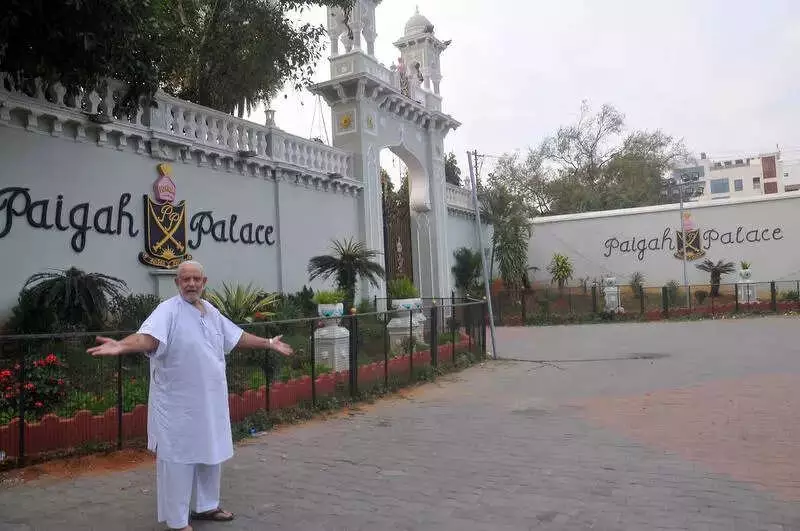
A proposed flyover in Hyderabad has ignited a fierce battle, transforming from a simple traffic debate into a complex fight over heritage preservation and the displacement of long-established households. At the heart of the controversy in Patigadda is the potential damage to the historic 130-year-old Paigah Palace and the demolition of dozens of private homes.
Heritage and Homes in the Path of Progress
The planned 1,500-metre flyover, intended to connect Rasoolpura to Patigadda and end at Necklace Road, now faces staunch opposition from the Patigadda Flyover Affected Property Owners Association. According to residents, the current alignment will directly impact 64 properties, comprising 46 private and 18 government holdings. The most significant casualty would be the Paigah Palace, a heritage gem built between 1890-1900 by Sir Vicar-ul-Umra, the former Prime Minister of Hyderabad state. Locals and Paigah family descendants warn that the construction would destroy a gate and a tower (burj) of the palace, which also served as the US Consulate from 2008 to 2023.
The residents' demand is clear: alter the route. They argue that an alternative alignment exists on nearby government land, which would prevent demolitions and reduce compensation costs. Association members even claim their suggested alternative would be shorter by approximately 500 metres, potentially lowering construction expenses as well.

A Question of Fairness and "Step-Motherly" Treatment
For the community, the dispute highlights a glaring inconsistency in how the government treats heritage structures. Obaid Ur Rehman, a resident and Paigah descendant, questions the logic behind risking Paigah Palace when the state has invested in restoring other landmarks like the Qutb Shahi tombs and Moazzam Jahi market. "When the govt restored several heritage structures... why is it planning to damage Paigah Palace?" he asks.
Rehman calls it "step-motherly treatment," emphasizing that the palace is not just a monument but his home, maintained with private funds. He poses a fundamental question of fairness: if he is not permitted to raze the palace for a highrise, how can the state justify damaging it for a flyover? "We are spending our own money to restore and maintain it. This is my home. When we are doing everything to safeguard it, how can the govt destroy it?" he states.
Lives and Livelihoods Hang in the Balance
The anxiety extends far beyond the palace walls. For many in Patigadda's lanes, the threatened houses represent their sole asset, a source of rental income, or a deep connection to family history. Seventy-six-year-old Nadir Yar Khan, living in the marked area, believes the government is ignoring available land and opting for a disruptive path. "It looks like the govt doesn't know what it's doing," he remarks.
For others, the issue is profoundly emotional. Asim Pasha, whose family has lived there for 20 years, says the demolition notices have caused sleepless nights. He highlights his 83-year-old father's wish to pass away in the family home, a sentiment he feels project documents ignore. "The govt must consider people's sentiments," Pasha urges.
The human cost is starkly personal. Nusrath Yar Khan, a 76-year-old Paigah family member and heart patient, fears losing 90% of his recently built home. "I don't know if my mind and body can take this tension," he says. Widow Razia Sultana faces the loss of her only rental income, while Md Rafiq, whose family has lived there for four generations, stands to lose 99% of his property, asking, "Where will we go?"
Officials from the Greater Hyderabad Municipal Corporation (GHMC) have acknowledged that the objections are under review. A senior engineering official admitted that government land is available but stated that feasibility and technical parameters must also be considered.
As Patigadda's residents remain in limbo with issued notices and unclear assurances, the flyover project has become more than an infrastructure plan. It is a decisive moment that reveals what—and whom—the city values in its relentless march toward development.






