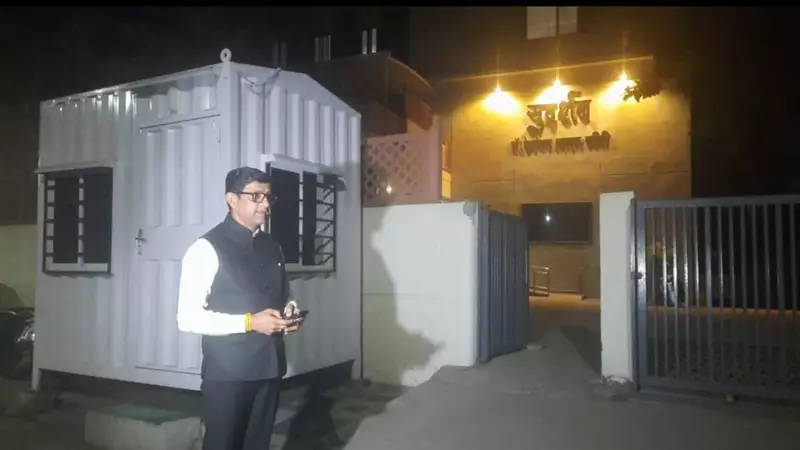
A major political controversy has erupted in Indore, Madhya Pradesh, after the district's top administrative officer and the city mayor attended a late-night meeting at a local Rashtriya Swayamsevak Sangh (RSS) office. This development comes in the wake of a tragic drinking water contamination incident in the Bhagirathpura area that has claimed at least eight lives and left dozens hospitalized.
Meeting Amidst a Public Health Crisis
The meeting took place on Wednesday night at the headquarters of the RSS's Malwa regional unit on Sudarshan Road. District Collector Shivam Verma and Mayor Pushyamitra Bhargav, both key figures responsible for managing the city's administration and crisis response, were present. The gathering was convened by Rajmohan, the RSS Malwa Prant Pracharak, and was described by sources as a closed-door discussion focused on failures in crisis management following the water contamination disaster.
While the Mayor acknowledged his presence, he sought to downplay its significance. "As a swayamsevak, I often go to the RSS office. It has nothing to do with the present crisis," Bhargav stated. Collector Shivam Verma has not publicly commented on the meeting. However, insiders revealed that the discussions covered coordination gaps, delayed response mechanisms, and communication failures that exacerbated public panic during the crisis.

Political Accusations and Defenses
The incident has drawn sharp criticism from the opposition Congress party. Madhya Pradesh Congress president Jitu Patwari, who circulated a video of the Mayor outside the RSS office, launched a scathing attack. "When poison is flowing through Indore’s taps, when homes are plunged into mourning... should the Collector be in the field, in hospitals, among the affected families, or inside the RSS office?" Patwari questioned. He labeled the late-night visit a blatant case of "cutting the nose of administrative impartiality."
The Bharatiya Janata Party (BJP) swiftly dismissed the allegations. Party spokesperson Shivam Shukla defended the officials, stating, "It was a courtesy meeting, and there was nothing wrong with it. Can’t officials meet people? The Congress should stop spreading misinformation." A BJP functionary further elaborated that the meeting was merely to apprise the RSS of the situation and the steps taken, not to make officials "answerable" to the organization.
The Underlying Tragedy and Institutional Protocol
The controversy is rooted in a severe public health failure. According to the latest bulletin from Indore’s Chief Medical and Health Officer, Dr. Madhav Prasad Hasani, at least 446 people from the affected zone have been hospitalized. While 396 have been discharged, 50 patients remain under treatment, with 10 in the Intensive Care Unit. The state government has informed the High Court of eight deaths, although district records show compensation cheques of Rs 2 lakh have been distributed to 18 families, indicating a potentially higher toll.
The meeting has intensified a debate on institutional protocols and the chain of command. District Collectors, as Indian Administrative Service officers, report through the state government machinery, while Mayors function under municipal statutes. Their joint presence at the office of a non-governmental, ideological organization during an ongoing crisis has raised questions about the boundaries between administration and political influence.
Sources privy to the discussions said the conversation also touched upon ensuring better coordination between bureaucracy and the civic administration, improving citizen engagement, and implementing measures to prevent such tragedies in the future. As Indore grapples with the aftermath of the contamination, this political row adds another layer of complexity to the city's recovery efforts.