

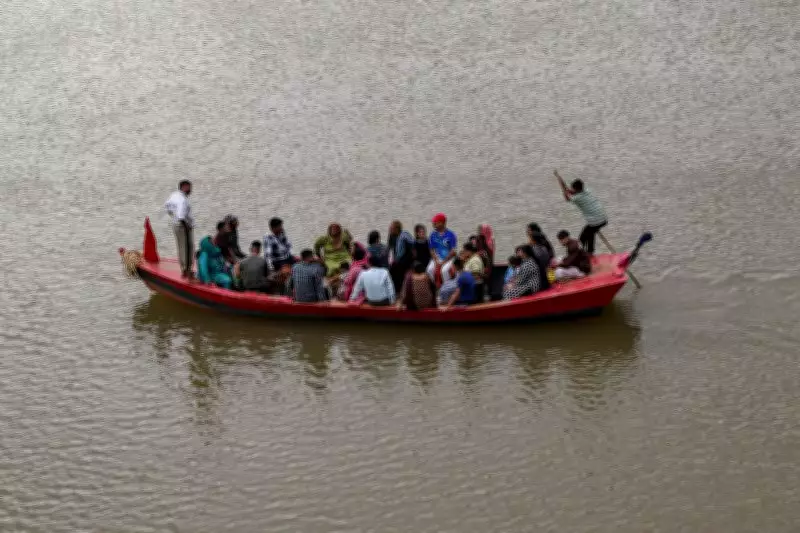
It has been 10 months since a vital bridge connecting several villages in Jammu was washed away, leaving the local population stranded and dependent on boats for their daily commute. The collapse of the bridge has severely disrupted life, cutting off access to markets, schools, and healthcare facilities.
Impact on Daily Life
Residents of the affected villages have been forced to adapt to a difficult routine. With no road connectivity, boats have become the primary mode of transport for people and goods. Elderly individuals, children, and patients face the most hardship, as crossing the river in small boats is risky and time-consuming.
Farmers are unable to transport their produce to markets, leading to financial losses. Students struggle to attend schools located on the other side of the river. Pregnant women and patients requiring urgent medical attention often face delays, with potentially serious consequences.

Government Response and Delays
Despite repeated pleas from the local community, the authorities have yet to begin reconstruction of the bridge. Officials cite administrative hurdles and funding issues as reasons for the delay. The lack of a temporary bridge or alternative road has added to the frustration of the villagers.
Local leaders have raised the issue in the assembly, demanding immediate action. However, the response has been slow, leaving the residents in a state of uncertainty.
Community Resilience
In the face of adversity, the community has shown remarkable resilience. Boatmen have increased their services, often operating from dawn to dusk to help people cross. Villagers pool resources to arrange for essential supplies. Yet, the situation remains precarious, especially during the monsoon season when water levels rise and boat travel becomes even more dangerous.
The villagers continue to hope that the authorities will prioritize the reconstruction of the bridge and restore normalcy to their lives. Until then, they rely on their own strength and the generosity of neighbors to survive.






