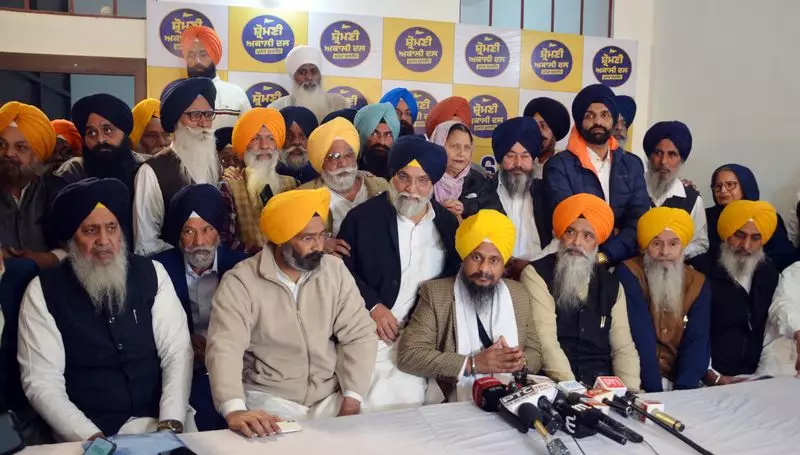
Akal Takht Jathedar Giani Harpreet Singh has issued a significant directive to the Shiromani Akali Dal (SAD), urging the prominent political party to strictly adhere to the edict (hukamnama) issued by the Sikh temporal seat for a comprehensive organizational restructuring. This call comes amidst ongoing internal deliberations within the party following a period of electoral setbacks and leadership challenges.
The Call for Adherence to the Edict
In a clear and firm statement, Giani Harpreet Singh emphasized that the Shiromani Akali Dal must follow the path laid out by the Akal Takht. The edict, which was issued to guide the party's revival, outlines a framework for internal reforms and a return to its foundational principles rooted in Sikh tenets. The Jathedar stated that the party leadership is actively engaged in discussions to implement these changes, signaling a crucial phase of introspection and potential transformation for the historic party.
The core of the Jathedar's message was that the Akali Dal's constitution and functioning must align with the directives of the Akal Takht. He highlighted that the edict was not merely a suggestion but a guiding principle meant to steer the party out of its current predicaments. This intervention from the highest Sikh authority underscores the deep interconnection between the party's political identity and its religious moorings.
Context of Internal Conflict and Electoral Challenges
This development follows a period of visible strain within the SAD. The party has faced internal dissent and public disagreements among its senior leaders, which have been seen as detrimental to its unity and public image. Furthermore, the Akali Dal's performance in recent state and national elections has not met its historical standards, leading to calls for a major overhaul from within its ranks and from its support base.
The Akal Takht's edict is viewed as an attempt to provide an authoritative framework to resolve these internal conflicts and to rebuild the party's structure from the ground up. The goal is to create a more cohesive and principle-driven organization that can effectively represent the interests of the Sikh community and the people of Punjab. The Jathedar specifically mentioned that the party's top leadership is involved in serious talks to execute the mandated revamp, indicating a high-level commitment to the process.
Implications for Punjab's Political Landscape
The Akal Takht's direct counsel to the Shiromani Akali Dal carries substantial weight in Punjab's socio-political arena. As one of the oldest regional parties in India, the SAD's attempts at reinvention could significantly alter the state's political dynamics. A successful restructuring guided by the Sikh edict may help the party consolidate its traditional voter base and present a renewed vision to the electorate.
However, the process of implementing such sweeping changes is often complex. It requires balancing the edict's spiritual and ethical directives with the practical demands of contemporary politics. How the party navigates this directive—whether it leads to a genuine transformation or remains a symbolic gesture—will be closely watched by political analysts and the public alike. The outcome will likely influence not just the future of the Akali Dal but also the broader political discourse in Punjab.
In conclusion, Giani Harpreet Singh's unambiguous call for compliance sets the stage for a critical chapter in the Shiromani Akali Dal's history. The party's response to this spiritual mandate will determine its trajectory as it seeks to regain its stature and relevance in Punjab's fiercely competitive political landscape.