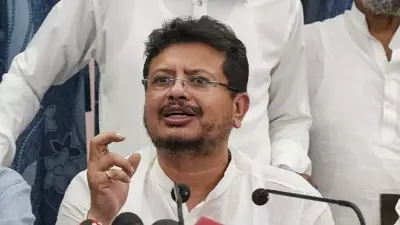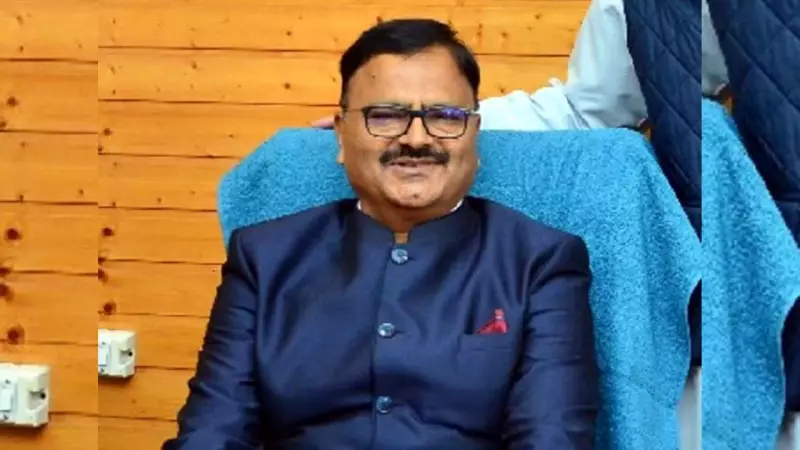
The government of Jammu and Kashmir, led by Chief Minister Omar Abdullah, has firmly rejected the demand for granting separate statehood to the Jammu region. On Tuesday, state minister Javed Rana termed the proposal "unviable" and instead suggested that the focus should be on reuniting Ladakh with Jammu and Kashmir.
Government's Firm Stance Against Further Division
Minister for Jal Shakti, Environment and Tribal Affairs, Javed Rana, addressed reporters and dismissed the calls for a separate Jammu state. He reminded everyone that Jammu and Kashmir was a full-fledged state before its bifurcation in 2019, which created the Union Territories of Ladakh and J&K. "Those who split J&K state now want to divide it further and desire to make even Kanak Mandi a state," Rana said, taking a pointed dig at the BJP without naming it directly. Kanak Mandi is a historic wholesale market in Jammu city.
Rana argued that while BJP legislators were free to raise the issue, there was no widespread demand for Jammu statehood from large parts of the region. He specifically mentioned that areas like the Pir Panjal regions of Rajouri and Poonch, and the Chenab Valley, do not support this demand. Countering the BJP's narrative, Rana expressed a different vision: "Instead, I believe that the day is not far when Ladakh will again become part of J&K."

BJP's Renewed Push and Allegations of Discrimination
The rejection comes amid renewed calls from BJP MLAs, particularly former minister Sham Lal Sharma, for a separate Jammu state. Sharma stated that this demand was not new and that he had first raised it in 2010 when he was a minister in the Congress-led government. He put forward several contentious claims to justify the demand.
Sharma alleged that the people of Jammu are more "nationalistic" compared to Kashmir. He accused political parties like the National Conference of creating political instability in Kashmir through rhetoric about accession rather than complete merger with India. Sharma also claimed that Jammu faces discrimination from "Kashmir-based rulers" and went as far as to call for a Hindu chief minister for the region.
Echoing similar sentiments earlier, BJP spokesperson Rajni Sethi said on January 5 that Jammu suffers because of "fundamentalists in Kashmir." She claimed that Jammu residents face suspicion and identity questioning when traveling outside J&K, as people wrongly assume the region is influenced by extremism.
National Conference Rebuts BJP's Charges
The National Conference swiftly rejected the BJP's allegations. Party spokesperson Tanvir Sadiq accused the BJP of having no politics "except tarnishing Kashmiris and their image." He asserted that the government would not allow BJP members to create a rift between Jammu and Kashmir.
Emphasizing the government's commitment to unity and development, Sadiq said, "We believe in equitable development of both regions." He pointed to the restoration of the Darbar Move—the biannual shift of the civil secretariat between Srinagar and Jammu—as an indication of the Omar Abdullah government's dedication to Jammu's development.
The debate highlights the ongoing political tensions and divergent visions for the future of the region, with the state government advocating for reunification and the BJP pushing for further bifurcation along regional lines.