Jonai Assembly Constituency: A Strategic Battleground for Assam's 2026 Elections
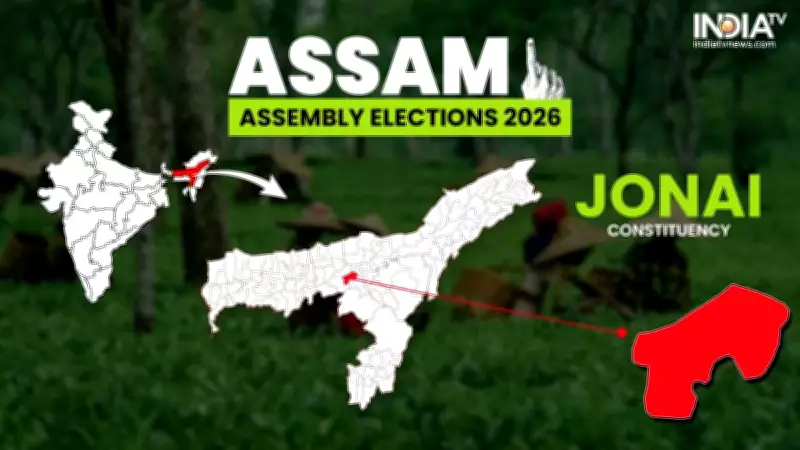
The Jonai Assembly constituency in Assam is poised to become a focal point of intense political competition as the state gears up for the 2026 legislative elections. This seat, located in the Dhemaji district, holds significant importance due to its demographic composition and historical voting patterns. With the ruling Bharatiya Janata Party (BJP) aiming to consolidate its dominance and opposition parties like the Indian National Congress and the All India United Democratic Front (AIUDF) seeking to reclaim lost ground, the electoral dynamics here are expected to be fiercely contested.
Historical Performance and Past Winners
In the 2021 Assam Assembly elections, the Jonai seat was won by Bharatiya Janata Party candidate Bhubon Pegu, who secured a decisive victory. Pegu defeated his nearest rival by a substantial margin, underscoring the BJP's growing influence in the region. Prior to this, the constituency had seen a mix of representatives from various parties, reflecting its volatile political landscape. The Congress party had previously held the seat, but its grip weakened over successive elections, allowing the BJP to make significant inroads.
The victory margin in the 2021 polls was notable, with Pegu garnering a significant percentage of the votes, highlighting the electorate's shift towards the BJP's development-oriented agenda. This win was part of a broader trend where the BJP expanded its footprint across Assam, capitalizing on anti-incumbency sentiments and strategic alliances. However, historical data shows that Jonai has not always been a BJP stronghold, with earlier elections witnessing close contests and occasional surprises from regional players.
Party-Wise Candidates and Strategies for 2026
As the 2026 elections approach, all major political parties are expected to field strong candidates in Jonai. The BJP is likely to renominate Bhubon Pegu, banking on his incumbency advantage and the party's performance in delivering infrastructure projects and welfare schemes. The BJP's strategy will focus on highlighting achievements in areas such as road connectivity, healthcare, and education, while also appealing to the constituency's diverse ethnic and religious groups through targeted outreach.
On the other hand, the Congress party is anticipated to put forward a formidable challenger, possibly a local leader with grassroots support, to counter the BJP's narrative. The Congress will aim to mobilize disenchanted voters by criticizing the ruling party's handling of issues like unemployment, inflation, and social harmony. Additionally, the AIUDF, which has a significant base among minority communities in Assam, may field a candidate to split the anti-BJP vote, adding another layer of complexity to the electoral arithmetic.
Key Issues and Electoral Dynamics
The Jonai constituency's electorate is primarily concerned with development, employment opportunities, and preservation of cultural identity. Key issues likely to influence the 2026 polls include:
- Infrastructure Development: Voters are demanding better roads, bridges, and connectivity to boost local economies.
- Agricultural Support: As an agrarian region, policies on crop prices, irrigation, and farmer welfare will be critical.
- Education and Healthcare: Access to quality schools and medical facilities remains a pressing concern for residents.
- Ethnic and Linguistic Rights: The protection of indigenous cultures and languages is a sensitive topic that parties must address carefully.
Given these factors, the 2026 election in Jonai is expected to be a closely watched contest, with outcomes potentially impacting the overall political landscape of Assam. The BJP's ability to retain the seat will depend on its governance record, while opposition parties must unite effectively to mount a credible challenge. As campaigning intensifies, voter turnout and last-minute alliances could play decisive roles in determining the winner.