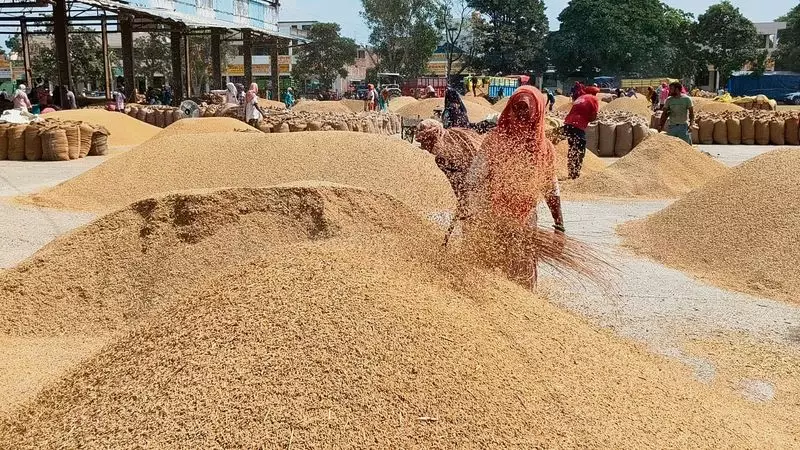
A significant irregularity in the allotment of paddy to rice millers in Karnal district has come to light, prompting an official investigation. Authorities discovered that millers were allotted a staggering quantity of paddy that far exceeded their combined milling capacity for the current season.
Discrepancy of 1.5 Lakh Metric Tonnes Uncovered
The core of the issue lies in a massive calculation mismatch. According to the official records scrutinized, the total milling capacity of all rice millers in the Karnal district for the ongoing 2023-24 season is approximately 8.5 lakh metric tonnes (MT). However, the quantity of paddy actually allotted to these millers by the district food and supplies department amounts to a whopping 10 lakh MT.
This translates to an excess allotment of around 1.5 lakh MT of paddy. This paddy, procured from farmers by government agencies, was essentially assigned for milling to facilities that lack the physical capability to process it within the stipulated timeframe.

Probe Ordered by District Food & Supplies Controller
Taking serious note of this glaring discrepancy, District Food & Supplies Controller (DFSC) Joginder Singh has ordered a thorough investigation into the matter. The probe aims to uncover how such a large-scale mismatch between allotted quantity and actual milling capacity occurred.
The investigation will delve into the entire allotment process. Officials are examining whether the error was systemic, a result of flawed data, or due to other reasons. The role of officials involved in preparing and approving the allotment lists is under scrutiny.
Potential Ramifications and Systemic Risks
This over-allotment raises serious concerns about the management of the state's paddy procurement and milling operations. Such a situation can lead to multiple adverse outcomes:
- Delays in Rice Production: Millers, burdened with more paddy than they can handle, may fail to mill and return the finished rice to government stocks on time, disrupting the public distribution system (PDS).
- Quality Degradation and Financial Loss: Prolonged storage of paddy beyond optimal periods can lead to spoilage, quality deterioration, and financial losses for the state exchequer.
- Contractual and Legal Issues: The allotment is based on formal agreements. Failure to process the allotted paddy may breach these contracts, leading to potential penalties or legal complications.
- Impact on Farmers: While farmers have been paid, inefficiencies in the downstream milling process ultimately affect the overall efficacy of the government's procurement policy, which is designed to support them.
The incident has put the district administration's oversight mechanisms in question. It highlights a potential lapse in cross-verifying the basic capacity data of millers before making substantial allotments of public stock.
Next Steps and Official Response
DFSC Joginder Singh has directed his department to conduct the inquiry with urgency. The findings are expected to pinpoint responsibility and lead to corrective measures to prevent a recurrence. The department may also need to rework the allotments to align with actual capacities to mitigate the immediate logistical crisis.
This case in Karnal has sent ripples through the food and civil supplies departments in Haryana, emphasizing the need for stricter audits and real-time monitoring of mill capacity versus allotment. The outcome of the probe is awaited, as it will determine if this was an administrative error or something requiring more severe action.