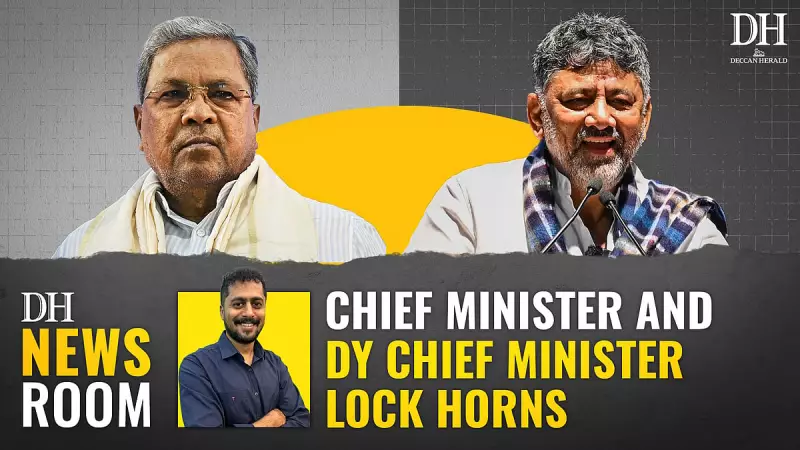
The political landscape in Karnataka witnessed significant turbulence as Deputy Chief Minister DK Shivakumar publicly expressed his dissatisfaction with the current power-sharing arrangement within the Congress government. The brewing tension between two of the state's most powerful leaders has created uncertainty about the stability of the administration.
The Deputy CM's Bold Demands
DK Shivakumar, who also serves as the state Congress president, made his grievances clear during a public event in Bengaluru on Tuesday. He openly declared that he would not remain silent about what he perceives as injustice in the distribution of responsibilities and power within the government. The Deputy Chief Minister emphasized that he knows how to claim his rightful share of power, indicating his readiness to confront the situation directly.
Shivakumar's comments came during a gathering where he addressed party workers and supporters. His unusually candid remarks about the internal dynamics of the government surprised many political observers and signaled that the long-simmering tensions between the two leaders had reached a boiling point.
Chief Minister's Firm Response
Chief Minister Siddaramaiah did not take long to respond to his deputy's challenge. Speaking to reporters later the same day, the Chief Minister asserted his authority in clear terms. Siddaramaiah stated that as the head of the government, he holds the ultimate responsibility for all decisions and actions of the administration.
The Chief Minister reminded everyone that the allocation of portfolios and responsibilities falls within his prerogative as the elected leader of the government. His response indicated that he would not be pressured into making changes to the current arrangement and that he remains firmly in control of the administration.
Background of the Power Struggle
The current confrontation stems from the complex power-sharing agreement that was put in place after the Congress party's victory in the state assembly elections. Both leaders have substantial political bases and have been competing for influence within the state government since its formation.
Political analysts note that the tension between Shivakumar and Siddaramaiah represents a deeper struggle for control over the party's machinery and governance in Karnataka. While Siddaramaiah holds the chief minister's position, Shivakumar's role as state party president gives him significant influence over the Congress organization across Karnataka.
The public nature of this disagreement marks a significant escalation in their ongoing rivalry. Previous differences had largely been managed behind closed doors, but Tuesday's exchange brought the conflict into the open, potentially affecting government functioning and party unity.
Potential Implications and Reactions
The public spat between the two top leaders has raised concerns about the stability of the Congress government in Karnataka. Party workers and supporters have expressed anxiety about the possible impact on governance and development projects.
Opposition parties have been quick to capitalize on the situation. The BJP and JD(S) have criticized the Congress for internal discord and questioned the government's ability to function effectively amid such public disagreements between its top leaders.
Senior Congress leaders at the national level are reportedly monitoring the situation closely. The party high command may need to intervene to mediate between the two leaders and prevent further damage to the government's image and functioning.
Political observers suggest that the resolution of this conflict will test the Congress party's internal conflict resolution mechanisms and could have long-term implications for the party's prospects in future elections.
As the situation develops, all eyes remain on Bengaluru to see whether the two leaders can find a way to reconcile their differences or whether the power struggle will intensify further, potentially leading to more significant political realignments in the state.